
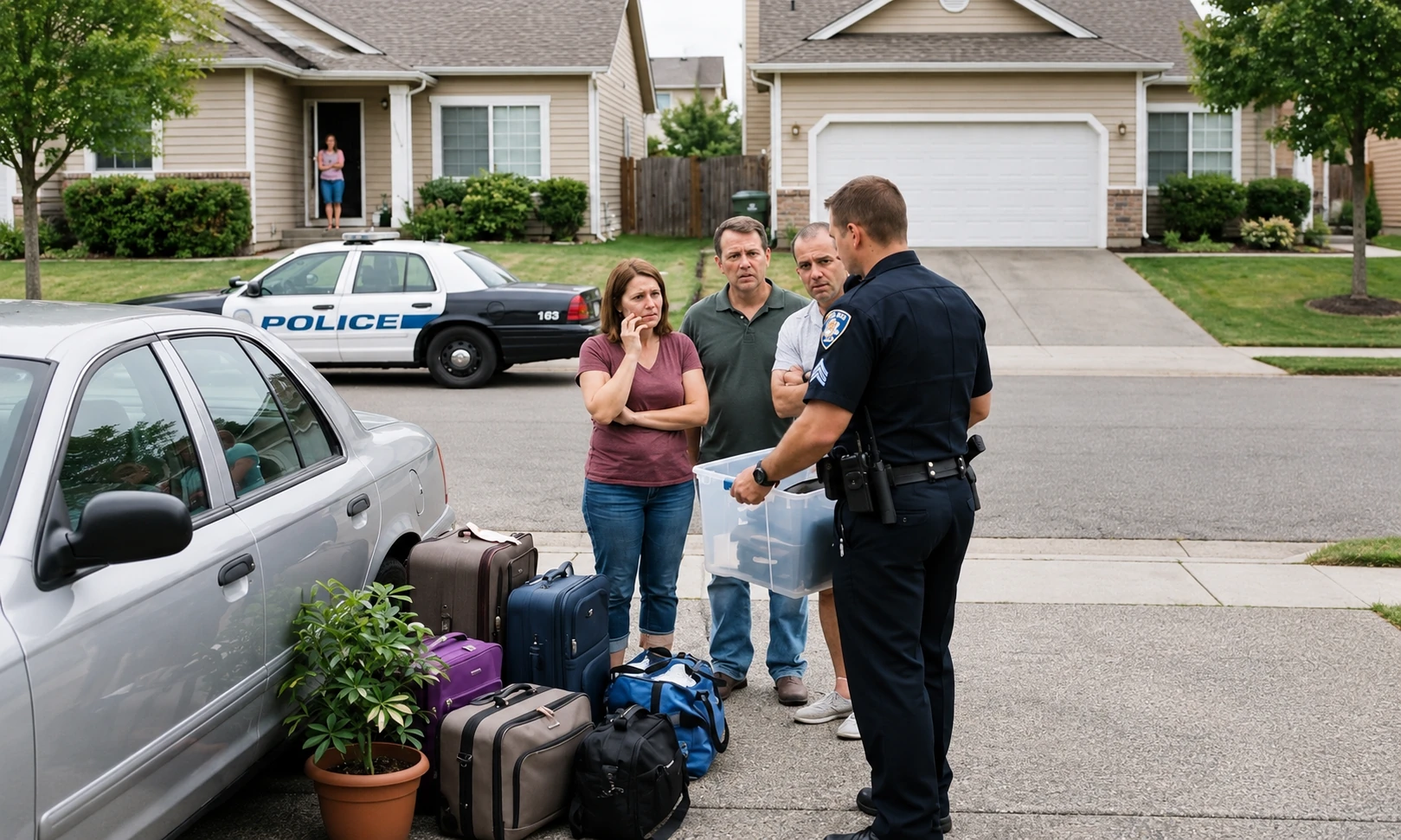
I picked up the folder.
“You’re going to give me every document you’ve signed.”
“Claire—”
“Every document.”
He didn’t move.
“Now.”
Something in my voice finally made him understand that the conversation was over.
He reached into his car.
A minute later, he returned with a thick envelope.
He handed it to me.
I opened it.
Loan documents.
Bank correspondence.
A refinancing application.
A property valuation.
And several pages with my name printed at the bottom.
My signature appeared beneath them.
I stared at it.
It looked like mine.
Almost perfect.
But not quite.
The slant was wrong.
The final letter was different.
Someone had copied my signature.
Mark had copied my signature.
I looked up.
“You did this.”
“Yes.”
“How long?”
He didn’t answer.
“How long, Mark?”
“Eight months.”
Eight months.
Eight months of sleeping beside me.
Eating dinner with me.
Asking me how my day was.
While secretly using my identity to protect himself from financial collapse.
I closed the folder.
“I want a lawyer.”
“Claire, please.”
“No.”
“I can explain.”
“You already did.”
He stepped closer.
“I love you.”
I looked at him.
“That isn’t love.”
He stopped.
“Love doesn’t secretly mortgage someone’s future.”
His eyes filled with tears.
“I was scared.”
“So was I.”
“I thought I’d lose everything.”
“You should have told me.”
“I couldn’t.”
“You could.”
“You wouldn’t have understood.”
I stared at him.
“You didn’t trust me enough to let me decide what happened to my own house.”
He looked down.
“No.”
That was the most honest thing he’d said all day.
I turned toward Diane.
She looked exhausted.
“Mrs. Bennett…”
“Please don’t call me that.”
She nodded.
“I am sorry.”
I believed her.
But I wasn’t ready to forgive her.
“You should never have called 911.”
“I know.”
“You knew you weren’t a resident.”
“I know.”
“You knew Mark was hiding something.”
She lowered her eyes.
“Yes.”
“Then you used the police to force your way into a house that wasn’t yours.”
She began crying.
“I was scared too.”
“I understand.”
I took a breath.
“But fear doesn’t give us permission to hurt other people.”
Diane nodded.
“I know.”
Officer Ruiz’s cruiser was still visible at the end of the street.
I walked toward it.
He rolled down the window.
“Everything okay?”
“No.”
I handed him the copied documents.
“I believe my husband committed financial fraud involving my property.”
He examined the papers.
His expression became serious.
“I’d recommend contacting an attorney immediately and notifying the lender that you dispute these documents.”
“I will.”
He nodded.
“And Mrs. Bennett?”
“Yes?”
“You were right to ask who owned the house.”
I looked back at my husband.
“I wish I’d asked years ago.”
That night, Mark didn’t sleep in our bedroom.
He stayed in the guest room.
Diane and Lisa went to a hotel.
Nobody argued.
Nobody called the police again.
Nobody tried to tell me what I should do.
The next morning, I called an attorney.
By Monday, we had filed the paperwork disputing the fraudulent documents.
The lender froze the disputed transaction pending investigation.
The forged signature was sent for examination.
And then came the part I hadn’t expected.
The bank called me.
They told me something Mark had never mentioned.
There were two additional applications.
Both had been rejected.
Both contained variations of my signature.
I sat at my desk reading the documents.
The same desk Diane had planned to take.
The same room Mark had casually decided wasn’t really mine.
And suddenly I understood something.
The house hadn’t betrayed me.
My husband had.
The house had simply been the one thing he couldn’t convince me to give away.
Three weeks later, Mark moved out.
He left with two suitcases.
No dramatic goodbye.
No shouting.
Just a quiet,
“I hope someday you understand why I did it.”
I looked at him.
“I understand exactly why you did it.”
He waited.
“You were afraid of losing your life.”
His eyes filled with tears.
“But you were willing to risk mine to save it.”
He had nothing to say after that.
Diane eventually called me.
Not to ask for money.
Not to ask to move in.
Just to apologize.
She told me she’d spent years believing her son could do no wrong.
Then she said something I’ll never forget.
“I thought being his mother meant I had to defend him.”
I told her,
“Sometimes loving someone means refusing to defend what they’re doing.”
She cried.
So did I.
But I didn’t invite her back into the house.
Not yet.
Maybe not ever.
That decision belonged to me.
For the first time in years, every decision about my home belonged to me.
The investigation eventually confirmed the signatures were forged.
The lien was removed.
The lender pursued Mark for the fraudulent paperwork.
His business collapsed.
The debts became his responsibility—not mine.
Our marriage ended quietly after that.
There was no dramatic courtroom scene.
No last-minute confession that magically fixed everything.
Just paperwork.
Hard conversations.
Therapy.
And the slow, painful process of accepting that the man I married wasn’t the man I thought I knew.
Months later, I was sitting at the kitchen table again.
The same table.
The same house.
The same afternoon light coming through the window.
My laptop was open.
My coffee was getting cold.
And for the first time in a very long time, the house felt peaceful.
Then the doorbell rang.
I froze.
For a second, I expected Diane.
Or Lisa.
Or Mark.
But when I opened the door, it was Officer Ruiz.
He smiled.
“Sorry to bother you.”
“Is something wrong?”
“No.”
He handed me an envelope.
“Just thought you’d want to see this.”
I opened it.
Inside was the final confirmation that the disputed lien had been released.
The house was officially clear.
I looked at the document.
Then at him.
“Thank you.”
He nodded.
As he walked away, I stood on the porch for a long time.
Months earlier, a police officer had stood in that exact spot and asked one simple question:
Who owns the house?
At the time, I thought the answer was just a name on a deed.
Now I knew better.
Owning the house wasn’t the most important thing I’d regained.
I had regained the right to make my own decisions.
The right to say no.
The right to question someone I loved.
The right to protect myself without feeling guilty.
And most importantly, I had finally learned that keeping peace in a marriage isn’t worth losing yourself.
I closed the door.
Walked back to the kitchen.
And sat down at the table.
My phone buzzed.
A message from Diane.
Just three words:
“I’m proud of you.”
I stared at it for a long time.
Then I smiled sadly.
I typed back:
“Thank you. I’m finally proud of me too.”
And for the first time since Mark’s message at 4:17 that Thursday afternoon, I didn’t wonder what was going to happen next.
Because this time,
I was the one deciding.