
Part 3: The Trust They Tried to Take
My commanding officer arranged temporary quarters near the base while the cottage issue was investigated. That night, I sat at a folding table surrounded by boxes and organized every document connected to the lock change.
The legal notice mentioned an estate restructuring authorization.
I had never signed one.
The cottage belonged to me. I had bought it eight years earlier using military housing benefits and deployment savings. My father’s company had no authority over it.
When I called the attorney listed on the notice, he sounded uncomfortable the moment I said I owned the house.
“We were given documentation showing Ellison Crest had temporary management authority,” he said.
“Who signed it?”
A pause.
“The file contains your electronic authorization.”
“I never authorized anything.”
He stopped speaking.
I told him to preserve every email, record, and document. Then I called Tessa Monroe, an attorney who handled estate matters for officers on base.
She arrived the next morning with a leather folder and two coffees. She listened as I explained the ICU calls, the changed locks, and the storage notice.
“Do your parents have any reason to think they control your property?” she asked.
“Not that I know of.”
“What about trusts, family partnerships, inheritance documents?”
The word trust pulled at a memory.
I opened the locked document case from storage. Beneath mortgage papers and military records was a sealed envelope in Ruth’s handwriting:
For Mara. Open when you finally need to know.
Inside was a letter and trust documents.
The Ruth Ellison Family Trust had been created five years earlier. Its principal value was just over five million dollars.
I was the sole beneficiary.
Not Lena.
Not my father.
Me.
Tessa read the conditions aloud. The trust could not be transferred by standard power of attorney, electronic signature, or estate proxy. Any release required my physical presence, verified identification, and biometric confirmation.
My grandmother had built it so no one could pressure a clerk, copy my signature, or move the money while I was absent.
Then Tessa requested an emergency audit from the trust administrator.
Two hours later, the report came back.
Someone had tried to access the trust at 10:47 p.m. on the night of my accident.
I knew the time immediately.
At 10:47 p.m., I had been under fluorescent lights, fighting to stay awake while making my ninth call.
The request included a document bearing my signature.
The administrator rejected it because my biometric confirmation was missing.
I looked across the table at Tessa.
“They weren’t waiting to hear whether I recovered.”
“No,” she said quietly. “They were waiting to see whether you would still be necessary.”
My phone rang before I could answer.
My mother’s name appeared on the screen for the first time since the accident.
Nine calls from the ICU had not been enough.
One blocked financial transfer had brought her to me within hours.
Part 4: Flowers and Folders
My parents arrived the next afternoon with flowers, prepared concern, and three legal folders. My father’s black SUV stopped first. My mother’s sedan followed. Then Lena’s white crossover pulled in behind them.
Adrian stepped out in a navy suit despite the Texas heat, adjusting his cuffs like he was entering a boardroom.
My mother held the bouquet against her chest.
“Mara,” she said when I opened the door. “Look at you.”
She reached for me, but I stepped back before her hands touched my ribs.
Her concern faltered.
“We were terrified.”
“Were you?”
My father cleared his throat. “There were communication problems at the party.”
“Nine of them?”
“The estate was crowded. The signal was unreliable.”
The explanation sounded rehearsed.
Lena examined the cottage as if searching for reasons to feel superior.
“We brought flowers,” she said.
“I noticed.”
I let them in because I needed to know what they wanted. Tessa had advised me not to accuse them yet.
“Let them talk,” she had said. “People get careless when they think you’re still confused.”
My mother placed the flowers on the counter without looking for a vase. My father walked straight to the table and arranged the folders in front of an empty chair.
He had been inside less than a minute.
“Mara, before emotions make this harder, we need to resolve a practical matter.”
“What practical matter?”
“A temporary restructuring of family assets.”
The first agreement gave Ellison Crest Properties management authority over Ruth’s trust. The second allowed company executives to use the trust as collateral. The third transferred most of the trust to a holding company controlled by Lena and Adrian after their marriage.
My mother placed her hand near mine.
“This protects you. You’ve never been interested in business.”
“I understand contracts.”
“Military contracts,” my father said. “This is different.”
Adrian leaned against the wall. “The company has several projects moving at once. Your grandmother’s money is sitting unused.”
“It isn’t your money.”
His jaw tightened. “No one said it was.”
The documents said otherwise.
Lena wandered toward the couch and stepped on my military duffel. The edge of her shoe pressed against my unit patch.
She laughed. “You still drag this thing everywhere?”
“Move your foot.”
She nudged it aside. “You’re always dramatic about military stuff. You survived a training accident, Mara. You weren’t storming a beach.”
No one corrected her.
Not my mother.
Not my father.
Not the man she planned to marry.
Pain sharpened in my ribs as I moved the bag myself. I wanted to tell them about the people I had treated, people whose families would have crossed oceans for one more conversation.
Instead, I remembered Tessa’s advice.
“I need time to read everything.”
My father relaxed.
“Of course. Forty-eight hours should be enough.”
My mother smiled as if I had begun to reconcile. Lena photographed the flowers, carefully cropping the legal folders out of the frame.
Before leaving, she posted a picture of my mother touching my shoulder with a caption about healing, gratitude, and family strength.
Nothing about the unanswered calls.
Nothing about the changed locks.
Nothing about the five million dollars.
When their cars disappeared, Tessa stepped out of the bedroom, where she had listened with my permission.
“They never asked how you were feeling,” she said.
“No.”
“They didn’t ask about your recovery.”
“No.”
She looked at the folders.
“They came prepared for a transaction.”
Part 5: The Threat
We sent the documents to the trust administrator. By evening, the administrator confirmed they matched the rejected transfer attempt. The signature resembled mine, but it had been digitally inserted. The file history contained an ID linked to Adrian’s personal device.
Then Tessa received a preserved email from the audit.
Adrian had sent it to my father twenty minutes before my ninth call.
If Mara doesn’t survive the week, the trust passes according to the secondary family provision. Do not contact the hospital until we know whether we still need her cooperation.
I read the message three times.
The flowers still sat on the counter. Their sweet smell made me sick.
My family had not simply ignored my calls.
They had decided my survival was financially inconvenient.
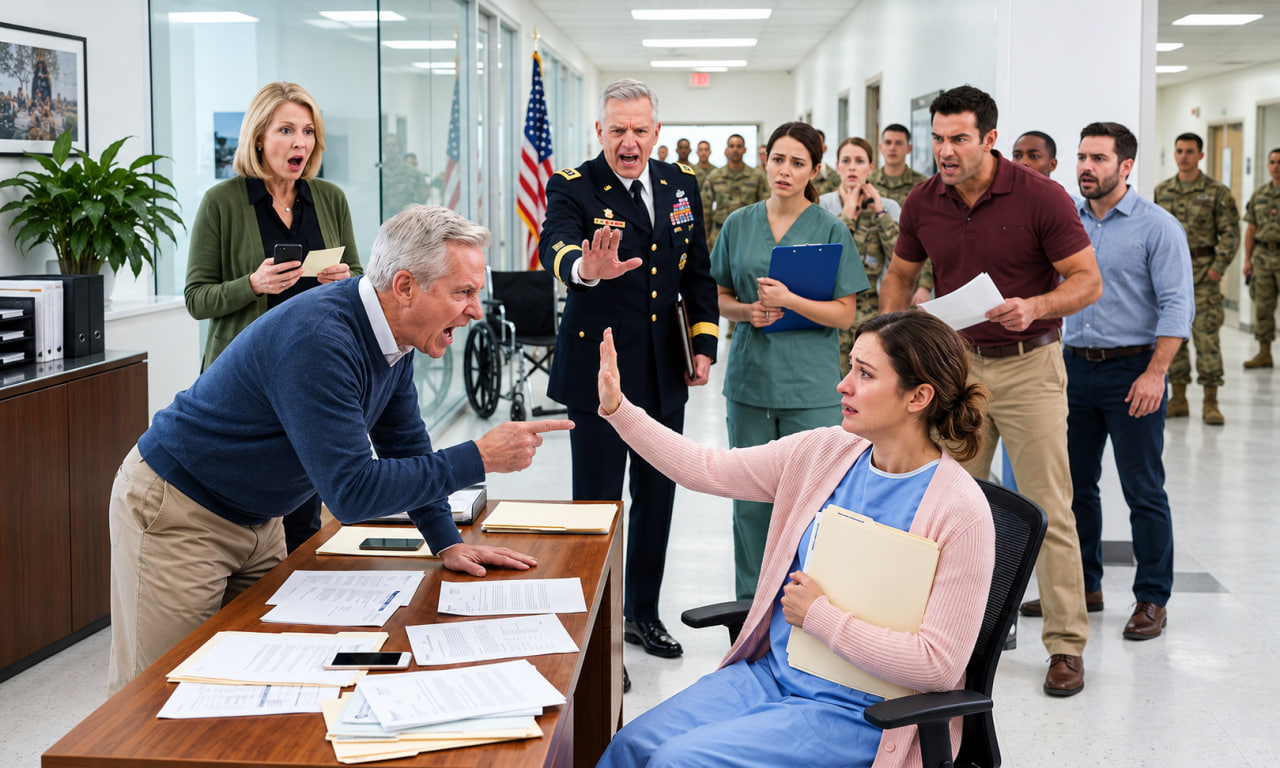
The next morning, my father returned with Adrian. No flowers this time.
Victor entered without waiting to be invited and sat across from my desk. Adrian remained near the door, using height and silence the way insecure men used expensive suits.
“We need to finish this,” my father said.
“I’m still reviewing the documents.”
“You’ve had enough time.”
Adrian placed a new folder on the desk. “Final agreement.”
I did not touch it.
My father looked at the brace beneath my shirt. “You’ve been through a traumatic event. Your judgment may not be reliable.”
“My judgment is fine.”
“Your emotions are not.”
Adrian opened a second folder.
“This is what happens if we can’t resolve this privately.”
Inside was a draft complaint accusing me of mishandling medication during recovery. It included fabricated claims from an unnamed employee and an unsigned request for a formal military investigation.
The accusation was false, but it was not harmless. Even an investigation could delay my return to duty, affect my clearance, and damage a career I had built through years of exhausting work.
Adrian watched my face.
“People hear ‘military physician’ and ‘missing medication,’ and they stop listening to explanations.”
“You manufactured this.”
My father folded his hands. “No one wants to file anything.”
“Then why does it exist?”
“To help you understand the consequences of refusing reasonable cooperation.”
I looked at him.
This was the man whose voice I had wanted in the ICU. I had spent my childhood believing he was distant because he was busy, severe because he was responsible, and controlling because he wanted the best for me.
The truth was simpler.
Victor Ellison loved people only when they stayed useful.
He opened a narrow wooden case and removed a gold fountain pen.
“Sign the release,” he said. “The complaint disappears, the property issue is corrected, and this family moves forward.”
“And if I refuse?”
Adrian answered first.
“Then you may lose the uniform you care about more than your own family.”
A recorder, legally placed on my desk in my own home, captured every word.
I let my hands shake because fear was what they expected.