
Then Camille called.
She was crying.
Her daughter Piper had already chosen the yellow bedroom in the new house.
Camille apologized for insulting Wesley’s cottage.
But even her apology ended with the same expectation I’d heard my entire life.
“Please! You’re the only one who can fix this. You always fix it!”
I printed the agreement.
I placed it on my kitchen table beside Wesley’s battered notebook.
Then I picked up a pen.
For several seconds, I held it over the signature line.
Saving everyone would have been easier.
It would have stopped the guilt.
The phone calls.
The accusations.
The pleading.
Then I saw Wesley’s sentence again.
“She deserves a house that holds.”
I put down the pen.
I did not sign.
I Refused to Save Them
I contacted Wendell Fry, a real estate attorney I knew through my appraisal work.
After hearing the facts, he explained that I didn’t need an elaborate revenge plan.
The sale had been executed through an invalid use of the Power of Attorney.
Gavin wanted his money returned.
I wanted my title restored.
“You don’t have to sue anyone,” Wendell told me. “Refuse the pen. Let the deal collapse under its own illegal weight.”
My father still believed enough family pressure could change my mind.
He arranged a Sunday meeting.
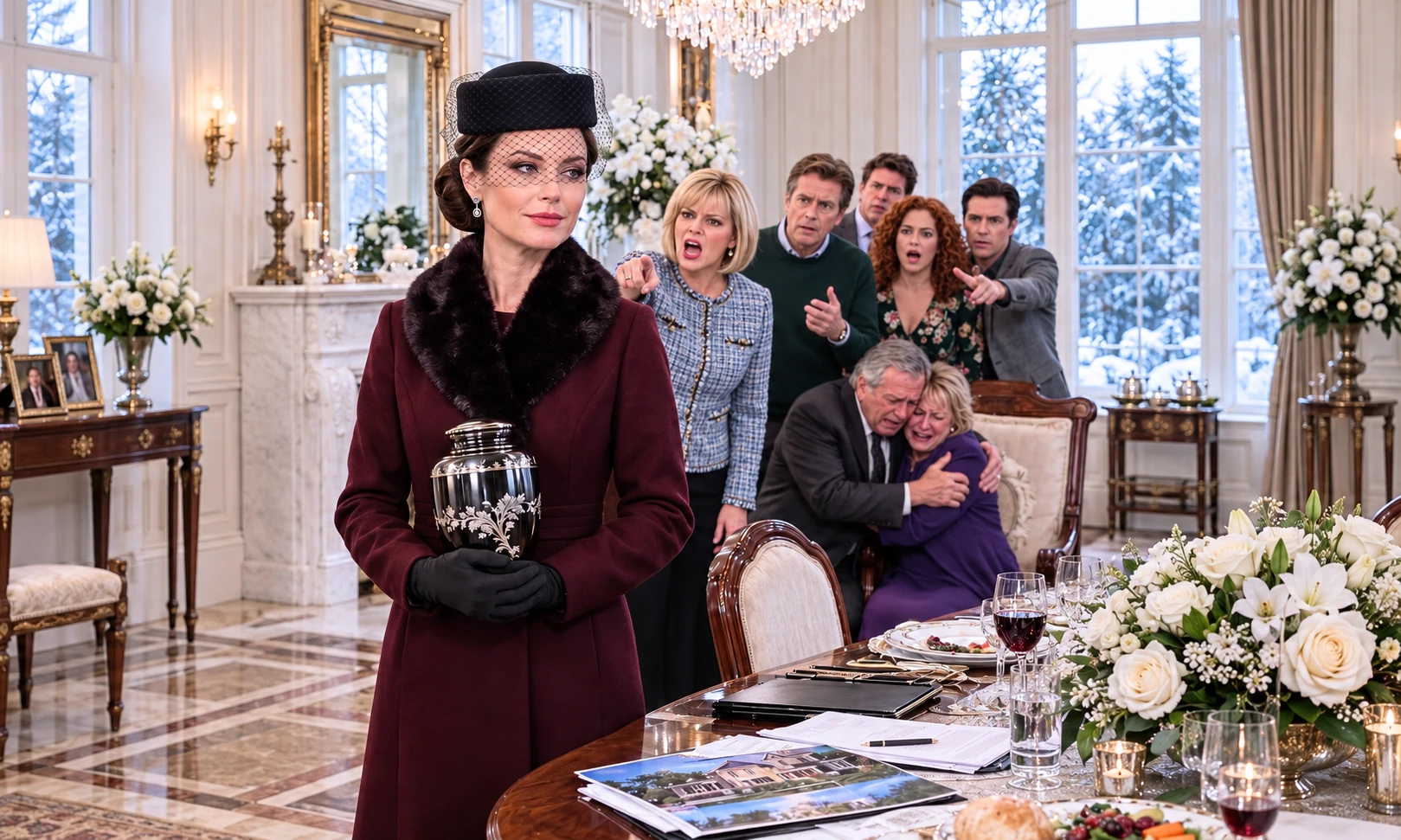
Relatives surrounded me at the dining table.
The unsigned ratification agreement sat in the middle.
Beside it was a pen.
Mom took my hand.
“Please, do this. And everything resets. You’ll just be my little girl again. My strong, perfect girl.”
Instead of reaching for the pen, I opened Wesley’s old canvas tool bag.
I pulled out his notebook.
I read his dated entries about the widening foundation cracks and seepage.
I spread his photographs across the table.
Then I showed everyone the engineering assessment.
Camille stared at the photographs of Wesley working beneath the house.
“I thought it was just a cheap old house. I didn’t know he was doing that.”
“I know. You thought it was a shack.”
Dad pushed the agreement toward me again.
My signature could still save Camille’s house.
This time, I picked up the pen.
Then I put its cap back on.
I slid the unsigned agreement across the table.
“You are absolutely right about one thing, Dad. I am completely done clinging to the past.”
For one brief moment, he thought I’d surrendered.
I rested my hand on Wesley’s notebook.
“I am going to retain ownership of the property.”
Then I pushed the papers back until they touched his chest.
“Water your own ferns, Dad.”
The meeting had been arranged to force me back into my old role.
Instead, it became the moment my family finally realized that the “strong daughter” wasn’t going to save them from consequences they’d created themselves.
The Foundation That Finally Held
The dining room went silent.
Then Trent stood.
“Cam, get up. We are leaving.”
Camille stared at him.
“But the house. Piper’s room…”
“We will find another house. But we are not building our children’s future on top of a stolen grave. I will not be a party to this.”
Camille eventually stood.
She couldn’t give me a complete apology.
But the entitlement I’d known my entire life was gone from her face.
I packed Wesley’s notebook into his canvas bag and left.
I didn’t feel victorious.
I didn’t even feel happy.
Freedom was more frightening than I’d expected because it was so unfamiliar.
The legal aftermath moved quickly.
Gavin Brandt agreed to rescind the sale.
His $182,000 was returned.
Ownership of the Hartwell cottage transferred cleanly back into my name.
My parents absorbed the financial damage because they’d already spent or committed the proceeds.
To repay Gavin and avoid a more serious legal battle, Curtis and Loretta took out a substantial second mortgage against their own home.
Camille lost her new house.
She also lost the $10,000 earnest-money deposit attached to her builder contract.
Dad left me one final voicemail.
“After everything this family sacrificed for you…”
I deleted it.
I never heard his voice again.
For once, I refused to accept responsibility for repairing consequences created by people who hadn’t asked permission before spending what belonged to me.
When spring arrived, I hired a structural engineering crew to repair the cottage properly.
I put Wesley’s notebook on the kitchen windowsill and showed the foreman the diagrams my husband had drawn.
“Begin at the western footing. He already mapped the trauma. Just follow his lead.”
The crew completed the underpinning Wesley had planned but never lived long enough to finish.
I used the $18,000 he’d saved and covered the remainder from my own savings.
Signing that check felt completely different from every sacrifice my family had demanded from me.
This was my choice.
Once the concrete cured, the spreading fracture stopped.
I replaced the locks.
I kept the only brass key myself.
In late May, I moved home.
The third stair still creaked.
But I stopped turning toward the hallway expecting Wesley to appear.
The cottage was no longer a mausoleum I preserved because I couldn’t let go.
It was my home again because I had finally decided for myself what the past meant.
On moving day, I bought a new Boston fern.
I placed it exactly where the old one had died.
Then I filled a watering can, soaked the soil and stayed on the porch until evening settled over the Hartwell meadow.
As darkness arrived, Wesley’s brass porch light came on.
The house Camille had mocked as a useless shack had done something important for my family after all.
Just not in the way she intended.
It exposed what happened when my father treated my property like family currency.
It exposed what happened when Camille assumed my sacrifices would continue forever.
And Wesley’s notebook taught me something even more important.
Protecting what he left me didn’t mean refusing to move forward.
For thirty years, my family called me the strong one whenever they needed somewhere to place their weight.
I finally understood that strength didn’t require carrying everyone else until I collapsed.
Now I water my own ferns.
I carry my own key.
And I decide for myself what deserves saving.
The earth holds firm beneath my feet.
And finally, so do I.