
It was the first morning I woke up and didn’t reach for Daniel’s pillow before opening my eyes. Not because I’d forgotten him, but because the reaching had finally become a memory instead of a reflex.
It was the first dinner where Grace laughed — really laughed, head back, mouth open — at something Madeline said, and I realized I hadn’t heard that sound at full volume in years.
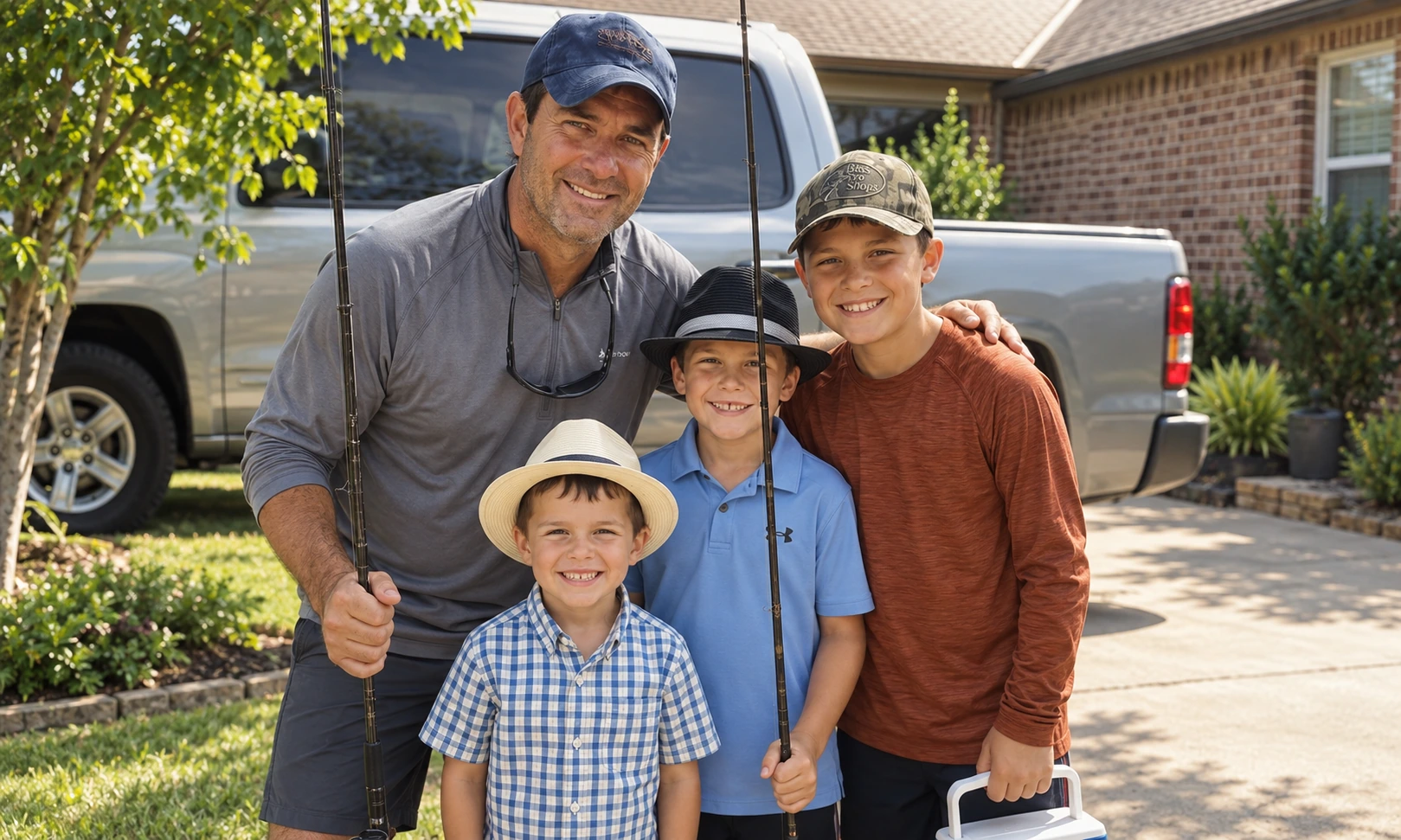
It was Sophie moving Caleb’s fishing rod from the closet to the garage wall, mounting it on two hooks she’d installed herself, and saying, “He’d want it where people could see it.”
She was right. He would have.
I began doing things I hadn’t done in six years.
I painted the hallway. Not because it needed it, but because the color had been Daniel’s choice and I wanted to make one of my own. I chose a pale blue that caught the morning light and made the whole corridor feel like early sky.
I joined a grief support group at the community center. I hadn’t wanted to before — partly because I wasn’t ready, and partly because Dean had once told me those groups were “just people sitting around being sad together,” and I’d believed him.
They weren’t. They were people sitting around being honest together, which is different and harder and infinitely more useful.
A woman named Lorraine, seventy-one, who had lost her husband to a construction accident, said something to me during my second meeting that I carried home like a stone in my pocket.
“Grief doesn’t get smaller,” she said. “You just build a bigger life around it.”
I built.
I went back to work — part-time at first, then full days. I reconnected with friends I’d let drift during the years when Dean’s visits were my only adult contact. I started walking the trail behind the high school on weekday mornings, early, when the light was still pink and the air smelled like wet grass.
The girls built too.
Sophie graduated from community college with a criminal justice degree. She told me once, quietly, that finding her father’s phone had changed the direction of her life. She wanted to work in victim advocacy — to be the person who takes the call when someone says, “I found something. I don’t know what to do.”
Madeline, now seventeen, became the family’s steady center. She cooked dinner three nights a week without being asked. She kept the calendar. She remembered Grace’s orthodontist appointments and Sophie’s registration deadlines. She was the logistics of our household, and she carried it with a calm practicality that reminded me so much of Daniel it sometimes took my breath away.
Grace, thirteen, was the one who surprised me most. She had been seven when they disappeared — too young to fully understand, too old to forget. For years she’d been the quietest of the three, the one who watched more than she spoke.
But after the trial, something opened. She started writing. Stories, mostly. Long, winding narratives about families and secrets and people who found the truth buried inside ordinary things — a drawer, a letter, a photograph no one thought to look at twice.
Her English teacher sent me a note: Grace has a rare gift. She writes with the clarity of someone who has learned that silence is not the same as peace.
I read that sentence three times and cried for an hour.
One evening in late spring, I set the table for dinner. Four plates, four glasses, four forks.
Sophie noticed.
“You used to set it for eight,” she said.
“I know.”
“Then for one.”
I looked at her.
“When did I set it for one?”
“The year after Dean was arrested. You went through a stretch where you ate standing at the counter. You didn’t set the table at all.”
I hadn’t realized she’d been counting.
“Four feels right,” I said.
She nodded.
We sat down. Madeline had made pasta. Grace poured water for everyone. Sophie said something about a professor she liked, and Madeline argued with her about parking on campus, and Grace read us a paragraph from a story she was working on — something about a woman who finds a letter inside a piano bench.
It was ordinary.
It was everything.
After dinner, I washed the dishes alone. The kitchen window was open. The evening air came through smelling like the neighbor’s jasmine and fresh-cut grass and the particular sweetness of a Midwest spring that is trying very hard to become summer.
I dried my hands and stood still for a moment.
The house was the same house. Same hallway, now blue. Same kitchen, same driveway where I’d taken that photo seven years ago. Same hook by the back door where Lucas’s hat used to hang.
The hat was gone now. Sophie had packed it into a memory box — a wooden chest she’d built herself — along with Caleb’s fishing lures, Jesse’s baseball glove, Daniel’s watch, and the cracked phone that had held the truth for six years in a drawer nobody opened.
The box sat on a shelf in the living room. Not hidden. Not displayed. Just present, the way the people it represented would always be present — not in the rooms, not at the table, but somewhere close, somewhere felt, somewhere just beneath the surface of every ordinary evening.
I turned off the kitchen light.
From the living room, I could hear Grace reading aloud to her sisters, her voice steady and clear, filling the house with words that hadn’t existed that morning.
I leaned against the doorframe and listened.
Daniel had said, in that video recorded at 11:47 PM in the cab of his truck, “Tell the girls their dad didn’t leave. Tell them I tried.”
I had told them.
And now, seven years later, his oldest daughter was studying justice. His middle daughter was holding the family together with a quiet competence that would have made him cry. And his youngest was writing stories about truth hidden inside ordinary things — because she had lived inside one.
He tried.
And the girls — his girls, our girls — were the proof that it mattered.
I stood in the doorway of my own house, listening to my daughters’ voices, and I let the evening settle around me like a blanket I had finally earned the right to pull close.
The table was set for four.
It was enough.