
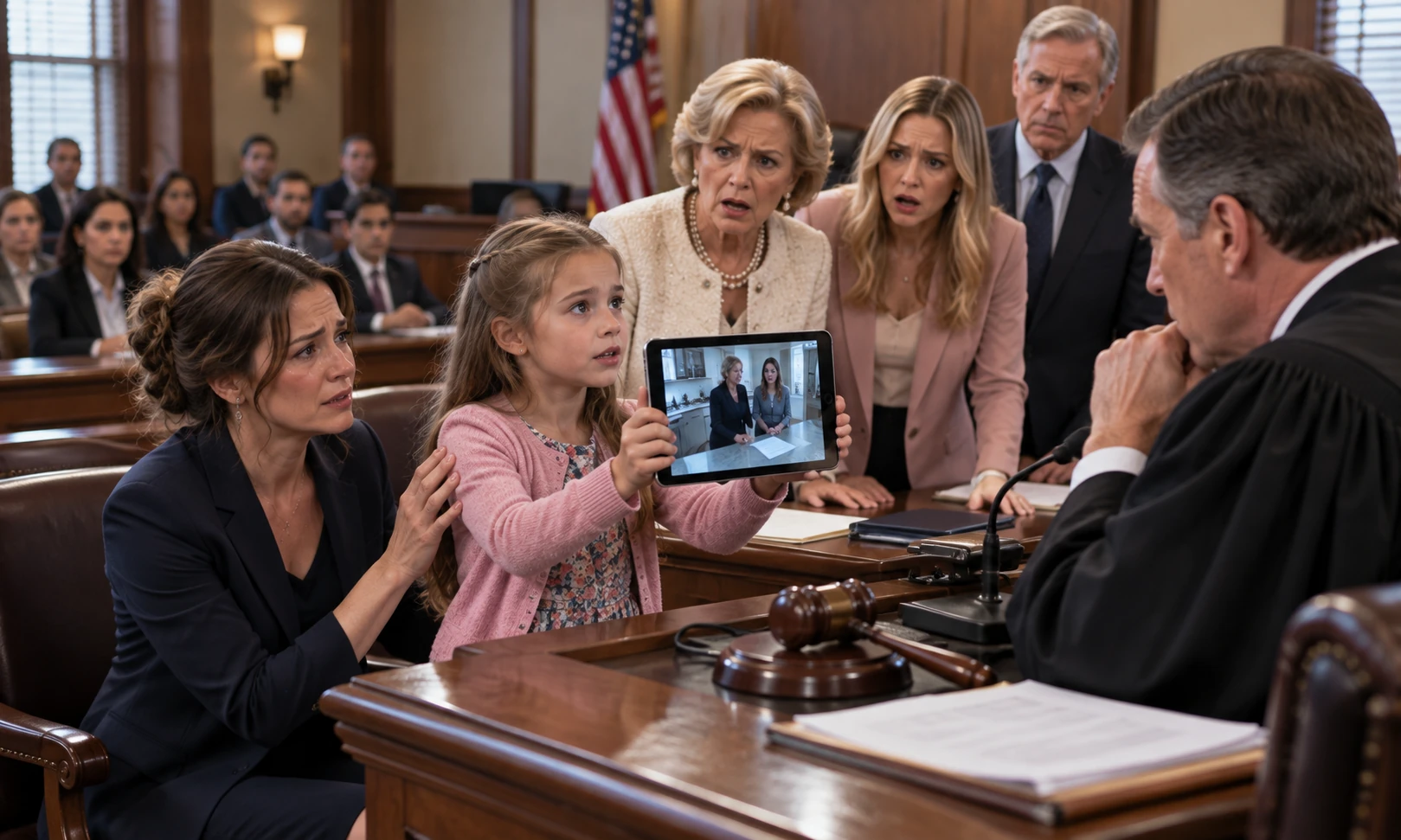
I looked at him.
“A gift?”
He turned toward me.
“You were helping your family.”
“I was helping you because you told me you needed help.”
My father shook his head.
“You always had more than us.”
I felt something inside me break.
Not anger.
Something quieter.
The final piece of hope that maybe there had been some misunderstanding.
I looked at him.
“I didn’t have more than you.”
He didn’t answer.
“I just gave you what I had.”
The courtroom became painfully quiet.
My attorney continued.
“And here is where the situation becomes particularly concerning.”
He handed the judge another document.
“This is the purchase agreement for the property my client’s parents currently live in.”
The judge looked at it.
Then he looked at my father.
“Your name is listed as purchaser.”
“Yes.”
“Who provided the down payment?”
My father said nothing.
My attorney answered.
“My client.”
My mother’s expression changed.
The judge flipped another page.
“And the second property?”
Again, silence.
“My client provided the funds.”
I suddenly realized why my attorney had been so confident.
My parents had spent years creating a story in which I was the irresponsible daughter who needed their help.
But the financial records told a completely different story.
They weren’t supporting me.
I had been supporting them.
And apparently, I had been doing it long enough that they had started believing they were entitled to it.
The judge looked at my parents.
“Why was none of this disclosed in your petition?”
My father’s attorney stood.
“Your Honor, financial support between family members isn’t necessarily relevant to possession.”
My attorney responded immediately.
“It becomes relevant when the plaintiffs are claiming that my client has no financial interest or legitimate connection to the property.”
The judge nodded.
“Continue.”
My attorney opened another envelope.
“And there is one final piece.”
I looked at him.
He had never shown me this before.
He pulled out an old photograph.
It showed the carriage house before the renovation.
The windows were boarded.
The porch was collapsing.
The walls were covered in peeling paint.
There was a hole in the roof.
It barely looked livable.
Then he placed another photograph beside it.
The same house.
New windows.
New roof.
New siding.
A repaired porch.
Flower boxes beneath the windows.
And in the second photograph, Norah stood on the porch holding a small stuffed rabbit.
I remembered that day.
She had been weak.
She could barely stand for more than a few minutes.
But she had looked at the house and whispered:
“Mommy, it feels like ours.”
I had smiled and told her:
“It is our home.”
I hadn’t realized how important those words would become.
The judge studied both photographs.
“Who paid for these renovations?”
My attorney answered.
“My client.”
My mother suddenly spoke.
“She only did that because she wanted to increase the value of our property.”
I turned toward her.
“That isn’t true.”
“She knew she would eventually leave.”
“No.”
My voice was calm.
“I never planned to leave.”
My mother scoffed.
“You were always going to move somewhere else eventually.”
I looked at Norah.
She was sitting quietly beside me.
Then I said:
“I was planning to stay until my daughter felt safe.”
The judge looked at Norah.
“Ms. Norah, may I ask you a question?”
Norah nodded.
“Do you like your home?”
She smiled faintly.
“Yes.”
“What do you like about it?”
She thought for a moment.
“My bedroom.”
The judge smiled.
“What else?”
“The kitchen.”
“Why?”
“Because Mommy makes pancakes there when I wake up early.”
A few people in the courtroom smiled.
Norah continued.
“And the little garden.”
She looked down.
“Grandma told me we had to leave it.”
My mother’s face hardened.
The judge looked at her.
“You told the child that?”
My mother didn’t answer.
Norah suddenly reached into her backpack again.
My heart sank.
“Norah…”
She looked at me.
“I need to show him this too.”
The judge nodded.
She pulled out a folded piece of paper.
It was covered in crayon.
She handed it to the bailiff, who passed it to the judge.
The judge unfolded it.
It was a drawing.
A small house.
A garden.
A woman.
A little girl.
And above them, written in uneven letters:
MOMMY + NORAH’S HOME
The judge looked at it for several seconds.
Then he asked softly:
“Did you draw this?”
“Yes.”
“When?”
“Yesterday.”
“Why?”
Norah’s voice became very small.
“Because Mommy said we might have to leave.”
The courtroom became silent.
Then Norah looked at my parents.
“I don’t understand.”
My mother frowned.
“Understand what?”
Norah swallowed.
“If Grandma loves us, why does she want us to leave?”
My mother opened her mouth.
No answer came.
Norah looked at Ava.
“Does Aunt Ava really need our house?”
Ava’s eyes filled with tears.
“No.”
Norah nodded.
Then she turned toward the judge.
“I don’t want Grandma to go to jail.”
My heart stopped.
“Norah…”
The judge leaned forward.
“Why would you think that?”
“Because Mommy said people can get in trouble if they lie.”
I looked at my daughter.
I hadn’t told her about the case in those words.
She had simply understood more than I realized.
The judge looked at my parents.
Then he looked at the recording.
Then the documents.
Then the photographs.
Finally, he looked at both attorneys.
“I am prepared to issue a ruling regarding possession today.”
My heart began pounding.
My attorney gently touched my shoulder.
The judge continued.
“Based on the evidence presented, I find that the plaintiffs have failed to establish the basis for immediate eviction.”
My mother closed her eyes.
My father lowered his head.
The judge continued.
“More importantly, the written agreement presented today raises serious questions about the plaintiffs’ representations to this court.”
My mother’s attorney stood.
“Your Honor—”
The judge raised his hand.
“I’m not finished.”
He looked directly at my parents.
“The court does not determine family relationships. It determines legal rights. And based on the evidence before me, the defendant has established a substantial right to remain in the carriage house.”
I felt tears gathering in my eyes.
But I refused to let them fall.
Not yet.
The judge signed the order.
“The eviction request is denied.”
Ava covered her mouth.
My father stared at the floor.
My mother looked at me with an expression I had never seen before.
Not anger.
Not disappointment.
Fear.
But then the judge added something unexpected.
“However…”
My attorney looked up.
The judge continued.
“I am referring the financial documents and the contradictory statements made during these proceedings for further review.”
My mother went completely still.
My father whispered something to his attorney.
The judge looked toward me.
“You should also consider whether you wish to pursue a separate civil claim regarding the funds you provided for these properties.”
I nodded.
“Thank you, Your Honor.”
The hearing ended.
People began leaving the courtroom.
I gathered my papers.
Norah climbed into my arms.
She wrapped both arms around my neck.
“Are we going home?”
I held her tightly.
“Yes.”
Our home.
For the first time, I could say it without fear.
We walked toward the courthouse doors.
But before we reached them, Ava called my name.
I stopped.
She approached slowly.
“I owe you an apology.”
I didn’t respond.
She looked at Norah.
“I’m sorry.”
Norah stared at her.
“For what?”
“For believing things about your mom that weren’t true.”
Norah thought about it.
Then she asked:
“Are you still going to take our house?”
Ava shook her head.
“No.”
“Why?”
Ava looked at me.
“Because I finally understand that it was never mine.”
I nodded.
Then Ava whispered something that made me stop.
“There’s one more thing you need to know.”
“What?”
She looked toward the courthouse hallway to make sure my parents couldn’t hear.
“Mom didn’t just want your house.”
I stared at her.
“What do you mean?”
Ava lowered her voice.
“She wanted everything.”
My stomach tightened.
“She has been talking to someone for months.”
“Who?”
Ava shook her head.
“I don’t know his name.”
“Then how do you know?”
“Because I saw the emails.”
My heart began pounding.
“What emails?”
Ava looked frightened.
“They weren’t about the carriage house.”
She paused.
“They were about your daughter.”
I froze.
Norah was still holding my hand.
“What about her?”
Ava swallowed.
“Your mother has been trying to get legal control over Norah’s medical trust.”
I couldn’t breathe.
“What?”
Ava’s eyes filled with tears.
“She told them you weren’t financially stable enough to care for her.”
The hallway seemed to tilt beneath my feet.
“She wanted the court to believe you were incapable of managing Norah’s future.”
I stared at Ava.
“Why?”
Ava shook her head.
“I don’t know.”
Then she whispered:
“But I think I know where the money went.”
I tightened my grip around Norah’s hand.
“Where?”
Ava looked directly into my eyes.
“Into an account with your mother’s name on it.”
And suddenly, the house wasn’t the biggest thing my family had tried to take from me.
They had been trying to take my daughter’s future.
PART 5
The words stayed in my head all the way home.
They had been trying to take my daughter’s future.
I didn’t tell Norah what Ava had said.
She was seven years old.
She had already witnessed enough for one lifetime.
So I buckled her into the back seat, drove home, and kept my voice calm.
“Mommy?”
“Yes, sweetheart?”
“Are we really going to stay in our house?”
I looked at her through the rearview mirror.
“Yes.”
She smiled.
“Good.”
Then she rested her head against the window and closed her eyes.
I waited until she was asleep before I called my attorney.
“I need you to find out everything,” I said.
“Everything about what?”
“My daughter’s trust.”
There was a pause.
Then his voice became serious.
“Don’t do anything tonight. I’ll start first thing tomorrow.”
I hung up.
But I didn’t sleep.
I sat at the kitchen table until nearly three in the morning, staring at the folder from court.
The same kitchen my mother had walked into without permission.
The same kitchen where she had placed that lease.
The same kitchen where I had once sat beside Norah during the worst nights of her illness.
I looked around.
The repaired cabinets.
The small wooden table.
The photographs on the refrigerator.
Norah’s drawings.
The little pink cup she always used for juice.
Everything suddenly felt different.
This wasn’t just a house anymore.
It was evidence of everything I had survived.
The next morning, my attorney arrived with another lawyer who specialized in trusts and family financial disputes.
They sat across from me at the kitchen table.
The second lawyer opened a folder.
“We found the account.”
My stomach tightened.
“How much?”
He looked at me.
“Approximately $186,000.”
I stared at him.
“That can’t be right.”
“It is.”
“Where did that money come from?”
He slid the statements across the table.
My hands began shaking.
The deposits were from an account I recognized immediately.
It was the medical settlement account established for Norah after her illness.
Money that had been set aside for her future medical expenses.
Money I had protected because I wanted her to have security when she grew older.
But over the past year, small withdrawals had been made.
Five thousand.
Eight thousand.
Twelve thousand.
Twenty thousand.
They had been moved into another account.
And that account belonged to my mother.
I felt sick.
“Who authorized this?”
My attorney looked at me.
“You did not.”
I shook my head.
“Then how?”
He pointed to a document.
“Someone submitted a power-of-attorney form.”
I looked at the signature.
My name appeared at the bottom.
But I had never signed it.
I stared at the paper.
“That isn’t my signature.”
The trust attorney nodded.
“We know.”
“How?”
“Because your bank has your original signature records.”
He placed another page beside it.
The signatures looked nothing alike.
Then he said: