
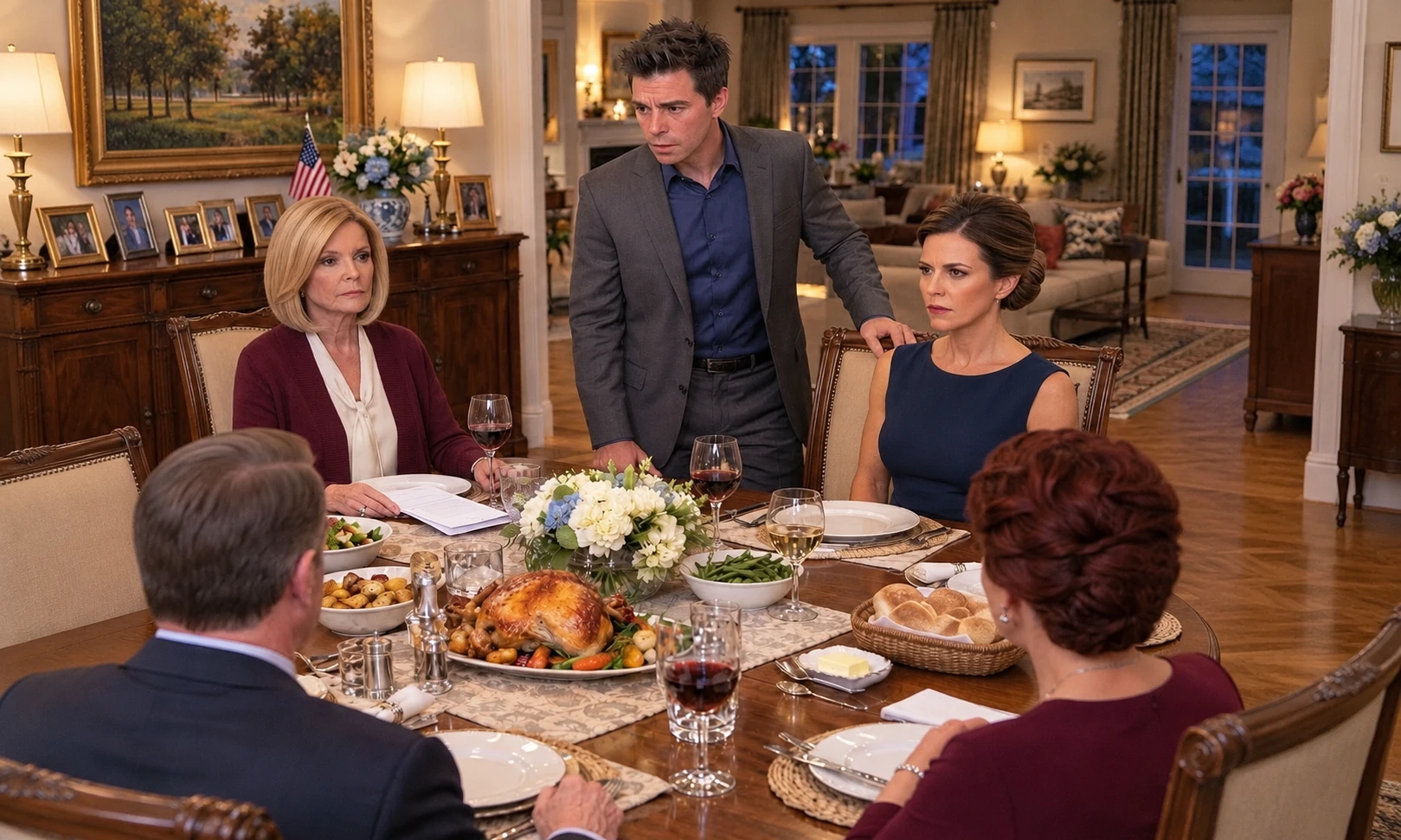
“No, sweetheart.”
He stared at his shoes.
“Grandma said Mason gets more because he’s real family.”
My hands went still.
“What did she say?”
Dustin hesitated.
“She said Parker isn’t really my dad.”
That hurt in an entirely different way.
Parker had been raising Dustin since he was three.
He taught him to ride a bicycle.
Took him to soccer.
Sat through school performances.
Read bedtime stories.
Stayed beside him whenever he was sick.
To Dustin, Parker was simply Dad.
Until Alana decided to make him question it.
I wrapped my arm around him.
“You did absolutely nothing wrong.”
From downstairs came the sound of suitcases being dragged across the floor.
Then I heard Ellie.
“She’s completely lost it.”
Alana answered confidently,
“Parker will straighten her out.”
I almost went downstairs.
Instead, I stayed beside my son.
Then my phone buzzed.
An audio file had appeared.
Apparently, Ellie’s phone had remained recording downstairs.
At first, I assumed it contained nothing more than our argument.
Then I continued listening.
I heard Ellie’s voice.
“Do you think she believed it?”
I froze.
Alana answered,
“She reacted exactly the way we wanted.”
Then Ellie laughed.
“Good.”
My stomach tightened.
The recording continued.
“Keep making Dustin uncomfortable,” Ellie said. “Eventually he’ll refuse to come here.”
There was a short pause.
Then Alana replied,
“Once he stops coming, Parker can visit without them.”
I stared at my phone.
Then Ellie said something even worse.
“Clarissa will get angry. We’ll have proof of her making another scene. Parker will finally understand that she’s the problem.”
Alana laughed.
“And maybe this place can finally feel like a family cottage instead of something Clarissa controls.”
Suddenly, every strange moment from the previous weeks looked different.
The separate meals.
The constant comparisons with Mason.
The comments about Dustin’s behavior.
The remarks about “real family.”
They weren’t simply being thoughtless.
They had been deliberately trying to make Dustin feel unwelcome so he would stop wanting to visit.
And they expected me to become angry enough that they could use my reaction against me.
I saved the recording immediately.
Then I forwarded it to Parker.
No explanation.
No argument.
Just the audio.
Thirty seconds later, he called.
I answered, preparing myself for whatever came next.
His voice sounded different.
“I’m coming home.”
I stayed silent.
“Don’t let Mom or Ellie speak to Dustin again until I get there.”
Then he paused.
“And Clarissa?”
“Yes?”
“When I arrive, I’m going to tell my mother something I should have told her a long time ago.”
The call ended.
Downstairs, Alana and Ellie continued packing.
They still believed Parker was rushing home to defend them.
They had no idea he had already heard their entire conversation.
And they certainly didn’t know that what Parker planned to reveal would completely change their definition of who counted as “real family.”
Full story continues in the first comment. 👇
Pasted markdown(20260918-072400).md
File
paraphase:
My son stood in my kitchen, set down his coffee, and looked me straight in the eye.
“Sarah thinks you’ve become a burden,” David said calmly. “And honestly, Mom, I agree.”
He waited for me to react.
To cry.
To argue.
Maybe even to beg him to take it back.
Instead, I simply said,
“Good to know.”
David looked almost disappointed.
What he didn’t realize was that those three words had just changed everything.
My name is Teresa Lambert. I’m sixty-four years old, and five years ago I lost my husband, Arthur.
David was my only son, so when he and his wife, Sarah, asked to move into my four-bedroom home temporarily, I didn’t hesitate.
They said rent in the city had become too expensive and they wanted to save for a down payment.
“Just until we get back on our feet,” David promised.
That was eight months ago.
At first, I was happy to have them around.
I cleared the guest rooms.
Made space in the closets.
Adjusted my routines.
But somewhere along the way, their temporary stay began feeling permanent.
Sarah started rearranging my furniture because she thought my style was “outdated.”
David began suggesting we order expensive dinners instead of eating what I cooked—usually expecting me to pay.
They took over the garage while my car stayed outside.
I made their breakfast.
Bought their groceries.
Washed their clothes.
And gradually, without noticing it, I had become the unpaid housekeeper in the home my husband and I had spent decades building.
Then David called me a burden.
That evening, something inside me finally shifted.
The following morning, I woke at six as usual.
But instead of brewing Sarah’s expensive coffee, preparing breakfast, and sorting everyone’s laundry, I made one cup of tea.
For myself.
Then I went outside and read my book.
At eight, Sarah appeared in the kitchen.
“There’s no coffee.”
“The beans are in the pantry.”