
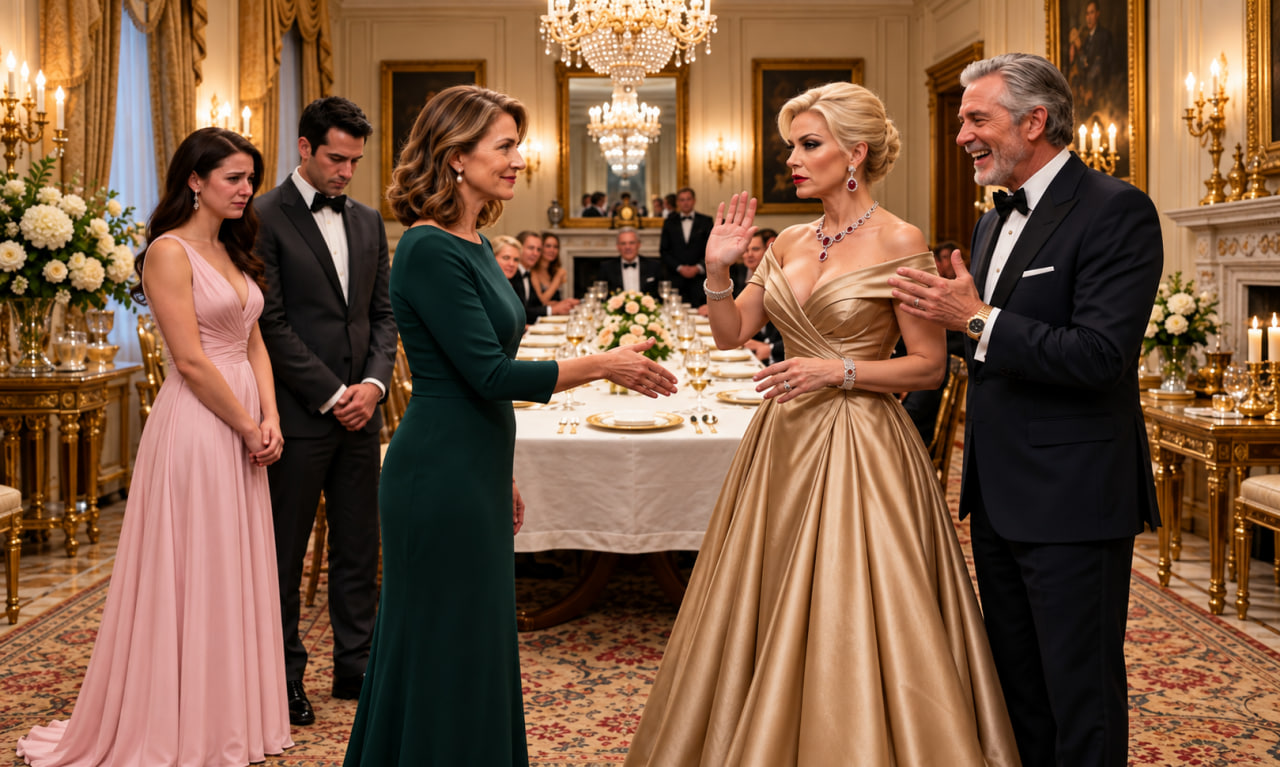
Victoria interrupted.
“You’re doing this because I insulted your cheap dress!”
I met her eyes.
“No, Victoria. Your behavior confirmed that I was dealing with people who believe accountability doesn’t apply to them.”
Several guests quietly exited.
Richard’s phone rang again.
He checked it and hurried into the hallway.
His carefully maintained image was falling apart.
Emma stood beside me.
“Mom, I never knew your firm was involved.”
“I kept my work separate from your relationship.”
She nodded.
“Thank you.”
Andrew came over.
“Mrs. Bennett, I’m sorry I didn’t defend you.”
I studied him.
“That apology means more if your behavior changes.”
He bowed his head.
Then Emma surprised everyone.
“Andrew, I need time before we get married.”
His expression fell.
“Emma, please.”
“I need to know whether you’ll stand beside me when your parents treat someone like this again.”
He didn’t object.
We departed together.
Over the following weeks, the financial repercussions emerged.
Richard’s conglomerate lost access to planned refinancing when the proposed acquisition fell through.
Lenders demanded updated financial statements and explanations of previous representations.
Independent auditors later found material accounting errors requiring restatement.
The company’s board initiated an internal investigation.
Richard eventually resigned as CEO after losing the directors’ confidence.
He sold a significant portion of his personal investments to meet obligations connected to company borrowing.
Victoria’s retail business faced separate difficulties as major commercial partners reconsidered their relationships amid the family’s financial controversy.
She initially remained CEO, but her board later replaced her following its own performance review.
Their downfalls weren’t caused by some extraordinary power I held over their companies.
Their own choices had created those risks.
I’d merely declined to fund them.
Six months later, Emma came to my office.
She seemed happier than she’d been in years.
“Andrew and I ended our engagement,” she said.
I set down my pen.
“Are you all right?”
She smiled.
“Better than I expected.”
She told me Andrew had apologized repeatedly but still had trouble establishing boundaries with his parents.
“I love him,” she admitted. “But I can’t build a marriage around hoping he’ll someday become brave.”
I hugged her.
“I’m proud of you.”
That weekend, we ate dinner overlooking Boston Harbor.
No costly champagne.
No arrogant executives.
Just a mother and daughter laughing over pasta.
Emma lifted her glass.
“To knowing our worth.”
I smiled.
“To never letting anyone else decide it.”
My phone buzzed.
Richard Whitmore had emailed.
He wanted another meeting, convinced the partnership might still be saved.
I deleted the message.
Outside, harbor lights reflected on the dark water.
I recalled Victoria’s words.
You’re not important enough to speak to me.
She judged people by their clothing and displayed wealth.
I judged them by their actions when they believed no one important was watching.
That was exactly why she’d lost.
She assumed I was beneath her because I didn’t appear powerful.
Too late, she learned real power needs no announcement.
Sometimes, it takes only one phone call before walking away.