
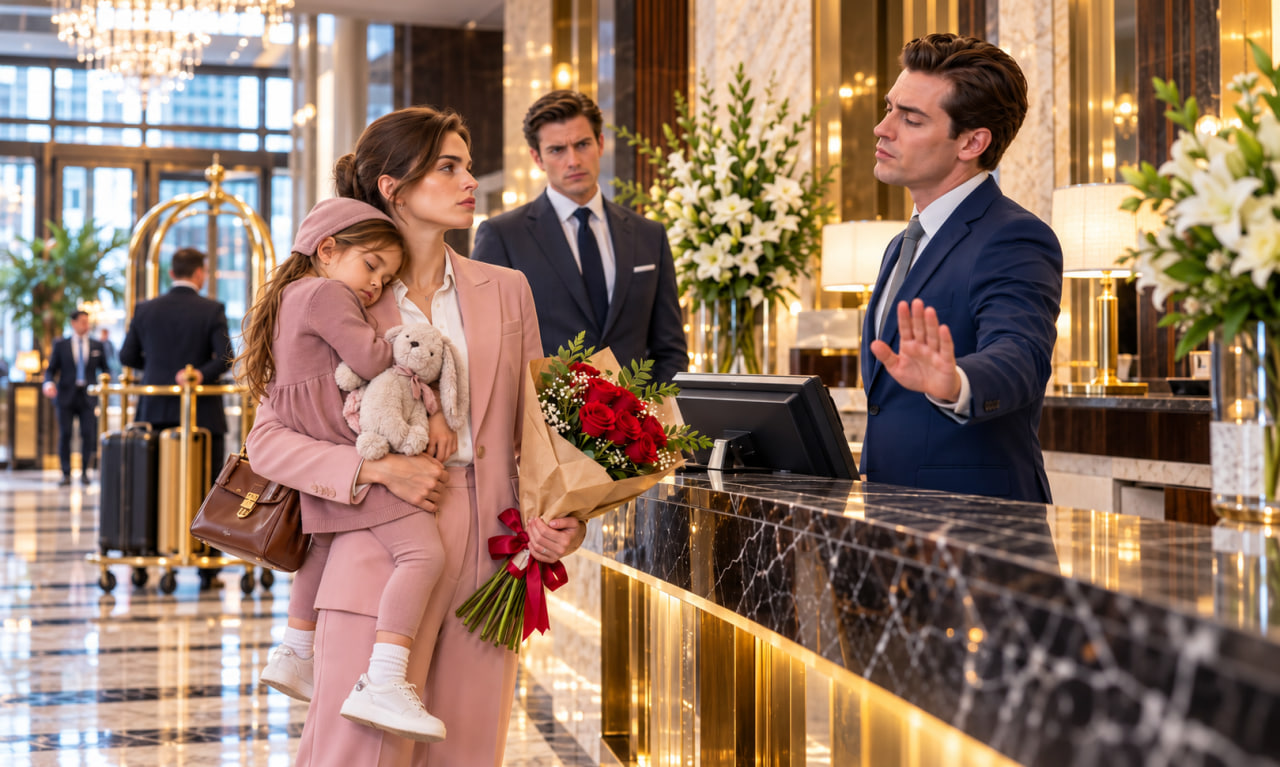
Investigate before deciding.
Daniel would have approved.
He’d always been the cautious one.
I acted quickly.
He asked questions.
I wanted immediate solutions.
He wanted proof.
Whenever I returned home furious about a manager, contract, vendor, or employee, he listened patiently.
Then he’d say, “Okay. Now tell me the version where the other person isn’t a cartoon villain.”
I used to hate that question.
After losing him, I started asking myself.
I went to bed shortly after midnight.
At 2:17 a.m., Lily’s crying woke me.
Softly.
She sat upright, gripping her rabbit.
I hurried to her bedside.
“Hey. Hey, I’m here.”
“I dreamed Daddy was at the airport.”
My heart broke in the same familiar place.
“What happened?”
“He was waiting for us.”
I sat beside her.
“Was he smiling?”
She nodded.
“Then it sounds like a good dream.”
“But we left him there.”
I pulled her into my arms.
“No, baby.”
“We got on the plane and he didn’t.”
“Daddy can’t get on airplanes anymore.”
She knew that.
Of course she did.
Children understand death before learning how to live with it.
“Tomorrow is the flower day,” she whispered.
“Yes.”
“Can we still do it?”
“Always.”
She rested against me.
After a moment, she asked, “Why were those men mean to you?”
I froze.
I hadn’t realized she’d heard enough to understand.
“They were tired,” I said.
Even I found that explanation unconvincing.
Lily frowned.
“You’re tired and you’re not mean.”
Sometimes children dismantle every convenient excuse adults create.
I stroked her hair.
“No. I’m not.”
“Did we do something wrong?”
Her question hurt more than Patrick’s insult.
Because that was the real harm.
Not embarrassment.
Not inconvenience.
My daughter had watched adults treat her mother like an unwelcome stranger, and now wondered whether we deserved it.
“No,” I said firmly. “We didn’t do anything wrong.”
“Then why?”
I looked at her.
How could I explain prejudice to a six-year-old while still furious with the people responsible?
“They looked at us and made guesses before they knew us.”
“Bad guesses?”
“Yes.”
She considered that.
“Like when I thought Mia didn’t like me but she was just shy?”
I smiled sadly.
“A little like that. Except grown-ups are supposed to know better.”
She leaned against me.
“Are they in trouble?”
I could have answered yes.
Instead, I said, “Tomorrow I’m going to find out what happened.”
Lily yawned.
“And then?”
“Then I’m going to decide what’s fair.”
She seemed content with that.
Within minutes, she was sleeping again.
I remained awake until morning.
At seven-thirty, room service arrived.
I hadn’t requested it.
Lupita stood outside carrying a tray.
“I asked the kitchen if they had extra pancakes.”
A nervous young server stood behind her.
Lily appeared beside me wearing pajamas.
“Pancakes?”
Lupita smiled.
“With blueberries.”
Lily gasped like someone had offered her diamonds.
I laughed.
We ate beside the window.
At eight-fifteen, I left Lily with Marisol, a trusted childcare professional from our Chicago office who’d cared for her on previous business trips.
Then I put on yesterday’s leather jacket.
No suit.
No briefcase.
I slipped my corporate badge into my pocket.
And headed downstairs.
Patrick stood at reception.
Karl was there too.
Neither knew my identity.
But another man stood beside them.
Tall, wearing a charcoal suit.
Robert Haines.
The general manager.
When he noticed me crossing the lobby, he frowned as if recognizing a problem from yesterday.
That was when I realized the issue might extend beyond two receptionists.
Chapter 3: The Manager Who Didn’t Ask
Robert Haines had managed the Grand Regent for eighteen months.
On paper, his performance was impressive.
Guest satisfaction had improved.
Labor costs remained controlled.
Revenue per available room was strong.
The corporate gala had gone smoothly.
His monthly reports were polished, video meetings efficient, and forecasts accurate.
I’d met him twice before.
Both times, I’d worn a tailored suit.
Both times, he’d casually addressed me as “Clara.”
But that morning, wearing jeans and my old leather jacket, I was unrecognizable to him.
He glanced at Patrick.
Then me.
Then back at Patrick.
“This is the guest from last night?” he asked.
Patrick nodded.
My disappointment grew.
Not because Robert didn’t recognize me.
I’d expected that.
People notice circumstances before faces more often than they’d admit.
What bothered me was his wording.
The guest from last night.
They’d clearly discussed me.
I approached reception.
“Good morning.”
Robert offered a professional smile.
“Good morning, ma’am. I understand there was an issue with your reservation.”
“There was.”
“I’ve reviewed the matter.”
“Have you?”
“Yes.”
“What happened?”
He glanced at Patrick.
“There was a technical issue locating the booking.”
Patrick stared ahead.
Something inside me became perfectly still.
“A technical issue.”
“Yes.”
“Was there also a technical issue when I was told to look for a cheaper motel?”
Robert’s smile tightened.
“I’m sure no offense was intended.”
“Was there a technical issue when your employee laughed at me?”
Karl lowered his gaze.
“Again, I wasn’t present.”
“That’s true.”
Robert seemed relieved by my agreement.
Then I continued.
“But Lupita was.”
His expression shifted.
Only slightly.
“Housekeeping?”
“Yes.”
“She shouldn’t have interfered with a front-desk matter.”
I allowed the silence to linger.
That was his immediate reaction.
Not asking what she’d witnessed.
Not whether she’d helped.
Not whether the guest was safe.
She shouldn’t have interfered.
“Why not?”
“Because employees are trained to remain within their assigned responsibilities.”
“Even when another department is failing?”
He stiffened.
“I wouldn’t characterize it that way.”
“Of course not.”
A woman approached the neighboring reception desk.
She wore an expensive cream coat and carried leather luggage.
Patrick’s posture transformed.
“Good morning, Ms. Bellman. Did you sleep well?”
“Perfectly.”
“Wonderful. May I arrange transportation?”
He smiled.
Warmly.
Naturally.
She thanked him.
He asked about her flight.
Karl stepped around the counter to collect her suitcase.
I watched silently.
Clearly, they were capable of kindness.
That made their behavior worse.
If they’d treated everyone poorly, the issue would simply have been bad service.
But they understood how to make guests feel valued.
They’d decided I wasn’t worthy of it.
After Ms. Bellman left, I faced Robert.
“Do you know my name?”
He hesitated.
“Ms. Vance, according to the reservation.”
“And did you review the reservation?”
“Yes.”
“All of it?”
“I reviewed the incident note.”
“Not the booking profile.”
His eyes narrowed.
“No.”
“Why not?”
“Because the issue had already been corrected.”
There it was.
The belief underlying everything.
The room had been located.
Therefore, nothing serious had occurred.
A humiliated guest.
A frightened child.
A housekeeper criticized for helping.
But the keycard worked, so the matter was supposedly finished.
I reached into my pocket.
Patrick watched.
So did Karl.
I placed my corporate identification on the marble counter.
Robert looked down.
His gaze moved across the card.
CLARA VANCE
FOUNDER & CHIEF EXECUTIVE
VANCE HOSPITALITY GROUP
His face went pale so quickly I nearly felt sorry for him.
Nearly.
Patrick leaned forward.
Karl froze.
Nobody spoke.
A phone rang behind reception.
It went unanswered.
Robert looked from the badge to my face.
Then back down.
“Clara?”
“Yes.”
He opened his mouth.
Then closed it.
Patrick whispered, “Oh my God.”
I turned toward him.
“You found my reservation last night.”
His face had turned gray.
“Yes, ma’am.”
“You saw my name.”
“Yes.”
“But even after that, it never occurred to you to wonder whether I might be connected to the company.”
“I—I didn’t—”
“No. You didn’t.”
Karl stepped backward.
Robert recovered enough to respond.
“I sincerely apologize. If I had known—”
I raised my hand.
Those words hurt more than he understood.
“If you had known what?”
He stopped.
“If you had known I owned the hotel?”
Silence.
“Would you have treated me differently?”
“Of course.”
“Then we have a much bigger problem than a reservation.”
He lowered his eyes.
People nearby began noticing.
A bell attendant by the entrance stood motionless.
Two other receptionists pretended not to listen.
A family crossing the lobby slowed.
I kept my voice quiet.
I didn’t want a spectacle.
I wanted answers.
“I am not angry because you failed to recognize me.”
Robert swallowed.
“I’m angry because you believe recognizing me should have mattered.”
Nobody moved.
“A hotel does not exist to make powerful people feel powerful. It exists to make tired people feel safe.”
My voice trembled slightly.
Not from nervousness.
But from remembering Lily wondering whether we’d done something wrong.
“I came through these doors carrying a sleeping six-year-old child. I had a confirmed reservation. I asked politely for help. Your staff looked at my clothes, my luggage, my flowers, and decided I did not belong here.”
Patrick looked panicked.
“I’m sorry.”
“I believe you’re sorry now.”
He flinched.
“That’s not the same thing.”
I turned to Robert.
“You said Lupita should not have interfered.”
He remained silent.
“She was the only person who behaved according to this company’s values.”
“I didn’t have all the information.”
“Neither did she.”
That struck him.
“She didn’t know I was the owner. She didn’t know whether I could afford this hotel. She didn’t know if I was important. She saw a mother carrying a sleeping child and decided that was enough reason to help.”
Robert stared at me.
“That is hospitality.”
I picked up my badge.
“I want yesterday’s lobby camera footage preserved.”
“Yes.”
“I want the front-desk activity log.”
“Yes.”
“I want training records for every employee on this shift.”
He nodded quickly.
“And I want the last six months of guest complaints involving front desk, class-of-room disputes, walkaways, reservation searches, and staff conduct.”
His expression changed.
That request frightened him more than the surveillance footage.
I noticed.
“Is there something I should know?”
“No.”
Too quickly.
Patrick glanced at Robert.
Then away.
A contradiction.
Small.
But unmistakable.
Daniel’s familiar advice echoed in my mind.
Tell me the version where the other person isn’t a cartoon villain.
I studied Robert for a moment.
“I’ll review everything before making decisions.”
He nodded.
“Of course.”
“No one is to retaliate against Lupita.”
His expression tightened.
“Of course not.”
“And no one discusses my visit with her before I speak to her.”
“Yes.”
I turned to leave.
Then Karl spoke.
“Ms. Vance.”
I stopped.
He looked terrified.
“I am sorry.”
I waited.
He forced himself onward.
“What I said was wrong.”
“Yes.”
“I thought…” He struggled. “I thought you were trying to pressure Patrick into giving you a room you hadn’t booked.”
“Why?”
He looked at me.
Then at my jacket.
That answered enough.
“I don’t know.”
“You do know.”
His jaw tightened.
“I made an assumption.”
“Yes.”
“I shouldn’t have.”
“No.”
He swallowed.
“I’m sorry Lily heard it.”
I looked at him again.
I’d never told Karl my daughter’s name.
He must have seen it on the reservation.
Or heard it from Patrick.
Still, he’d thought about my daughter.
That mattered.
Not enough to erase his actions.
But enough to remind me he was human.
“Thank you for saying that.”
I headed toward the elevators.
Before reaching them, Lupita appeared from the service corridor with fresh linens.
She surveyed the lobby.
The expressions.
Then me.
Finally, Robert.
His face told her everything.
Her shoulders slumped.
Not with relief.
With fear.
That surprised me.
Robert noticed too.
“Lupita,” he said.
She stopped.
I stepped between them.
“I was just coming to find you.”
She studied me cautiously.
“Am I in trouble?”
The immediacy of her question tightened my stomach.
“For helping me?”
She didn’t respond.
I looked at Robert.
He turned away.
That was the second contradiction.
Suddenly, what happened yesterday wasn’t the only thing I needed to investigate.
Chapter 4: What Kindness Had Cost Her
I invited Lupita into a small private conference room near the executive offices.
She perched on the chair’s edge, looking as though someone might tell her she didn’t belong there.
I sat opposite her.
“You’re not in trouble.”
She nodded without relaxing.
“Why did you think you were?”
“I interrupted the front desk.”
“You said that last night.”
“No. Mr. Haines said that.”
“When?”
She looked up.
“Before.”
The room fell silent.
“How many times?”
Lupita hesitated.
I gave her time.
Finally, she answered, “A few.”
“What happened?”
She rubbed her palms together.
“Sometimes guests need things. Directions. Help with luggage. Someone to call a cab. Sometimes they’re upset and they see the first uniform.”
“That sounds normal.”
“It is.”
“Then why were you told not to help?”
She smiled wearily.
“Because helping takes time.”
I frowned.
“Our housekeeping productivity targets increased last year.”
I knew that.
Rooms cleaned per shift had been adjusted following a staffing review.
“The targets are demanding,” she continued. “If we stop too often, we fall behind. If we fall behind, supervisors get pressured. Then we get pressured.”
“That’s not what the metric is for.”
“I know.”
Her answer stung.
Because I’d approved those metrics.
Numbers developed around a corporate conference table had reached the ninth floor as minutes taken from people who needed help.
That responsibility was mine.
“What else?”
She seemed uncomfortable.
“Nothing.”
“Lupita.”
“I don’t want anyone fired because I talked.”
“People will be held accountable for their own actions. Not for your honesty.”
She looked at me.
I waited.
Eventually, she spoke.
“Some guests get helped faster than others.”
“Based on what?”
“You know.”
I did.
But I needed her to describe what she’d witnessed.
“Clothes,” she said. “Credit card. Accent. Luggage. Sometimes skin.”
Her voice softened on the final word.
My jaw tightened.
“Have you reported it?”
“Once.”
“To whom?”
“My supervisor.”
“And?”
“She told Mr. Haines.”
“What happened?”
“He held a meeting.”
“That sounds appropriate.”
Lupita gave me a long look.
“The meeting was about staff staying in their lanes.”
I briefly shut my eyes.
It wasn’t proof of some conspiracy.
Nor evidence that Robert had explicitly ordered discrimination.
But it revealed a workplace culture that prioritized appearances over intervention.
“Do you believe Mr. Haines encourages employees to mistreat guests?”
“No.”
Her answer came immediately.
I opened my eyes.
“No?”
“He wants everything smooth. Fast. No complaints. No complications. He doesn’t tell people to be cruel.”
She paused.
“He just doesn’t ask many questions when the numbers look good.”
That sounded more believable.
And somehow more dangerous.
Villains are simple to recognize.
Systems built around convenience are harder to confront.
I spent the next four hours examining records.
The security footage confirmed my recollection.
Patrick’s initial search took eleven seconds.
He entered my name once.
When nothing appeared, he stopped searching.
Only after Lupita intervened did he open the executive reservation tab.
Karl’s laughter was visible.
So was Patrick’s refusal to contact the manager.
There was no room for doubt.
The complaint records were less straightforward.
Most involved ordinary issues.
Noise.
Billing disagreements.
Early check-in problems.
Yet a pattern emerged.
During the previous six months, twelve guests had complained about dismissive reception staff who failed to properly verify reservations.
Seven described feeling judged by clothing, appearance, or payment method.
Three specifically identified Patrick.
Two named Karl.
None resulted in formal discipline.
They’d all been marked “service recovery completed.”
A complimentary wine bottle.
Loyalty points.
Breakfast vouchers.
Late checkout.
Complaints compensated.
Never properly investigated.
I found Robert in his office at two-thirty.