
My daughter Maya was twelve when everything finally came apart.
She had struggled with asthma for years, so I thought I knew every version of a frightening night.
I knew the inhalers.
The warning signs.
The rushed drives to urgent care.
But this time was different.
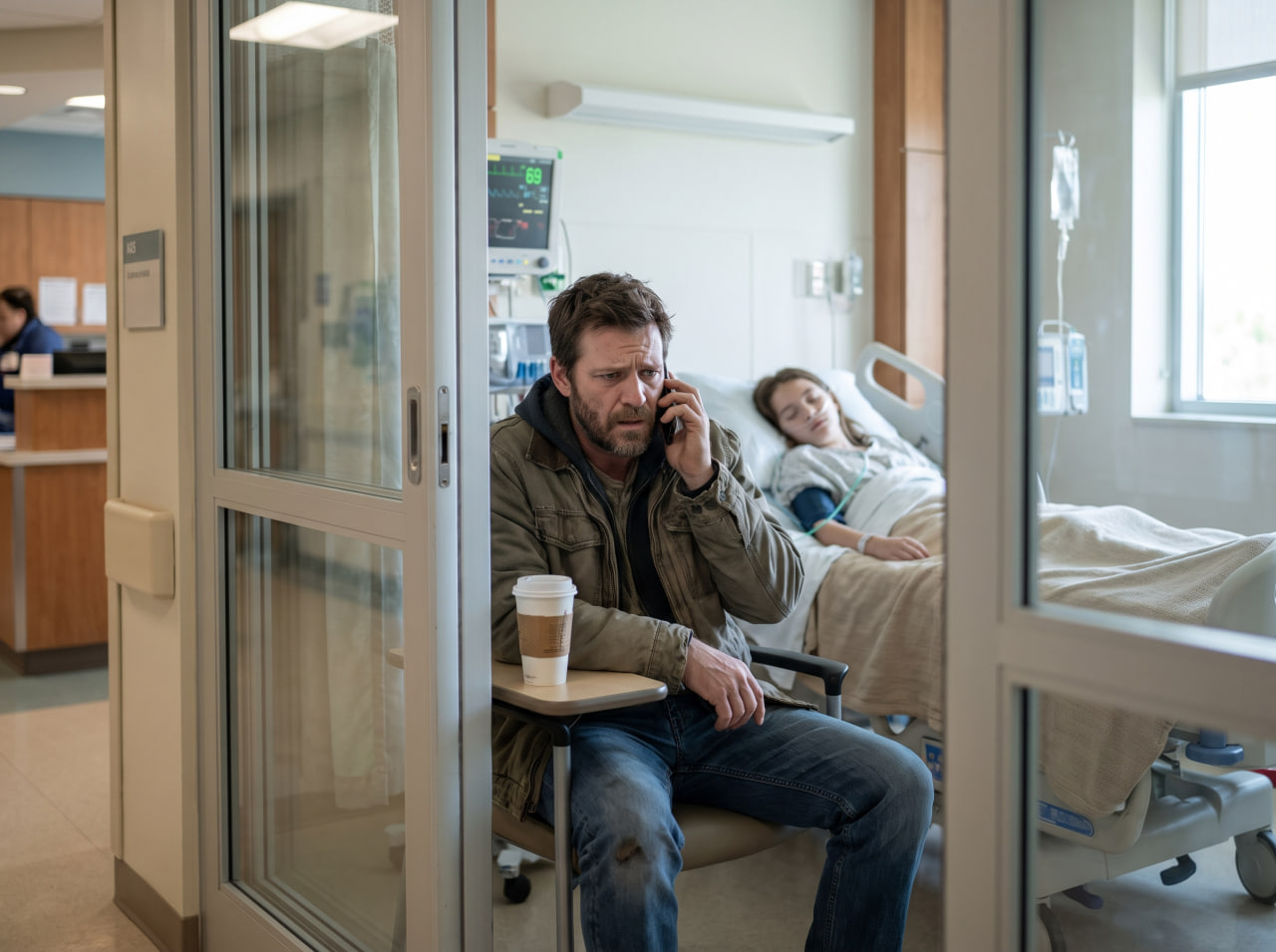
By morning, Maya was in pediatric critical care, surrounded by monitors while doctors watched her breathing closely.
I had been awake all night.
My coffee had gone cold hours earlier.
Every time one of the monitors changed rhythm, my hands started trembling.
Then my phone began vibrating.
Dad.
I ignored the first call.
Then the second.
On the third, I answered.
“Nate, I’ve been trying to reach you.”
“I’m at the hospital.”
“I know.”
I looked through the glass toward Maya’s room.
“Then why are you calling?”
Dad sighed as if I were already making things difficult.
“We need to discuss Clara’s engagement party. It’s tomorrow.”
For a moment, I genuinely thought I had misunderstood him.
My Daughter Was in Critical Care, but They Wanted a Party
My younger sister Clara’s engagement party had become a full-scale family production.
My parents had rented a hall.
Ordered decorations.
Assigned responsibilities.
Mine was the catering bill.
Not requested.
Assigned.
“Dad, Maya is in critical care.”
“I’m aware.”
I still remember those words.
Then he continued talking about how exhausted Mom was, how everyone was setting up that day, how I still had the folding chairs, and how the caterer needed to be paid.
“I’m not leaving my daughter to help set up a party.”
“It’s only a few hours.”
“No.”
His tone changed immediately.
“You always seem to have an excuse whenever this family needs something.”
I looked at Maya through the doorway.
She looked impossibly small beneath the hospital blanket.
“You called while my daughter is seriously ill. What exactly did you think I was going to say?”
“You could have said yes.”
Something inside me became completely still.
Because for thirty-six years, I had been the one who said yes.
At twelve, I fixed things around our house because Dad could not be bothered.
At sixteen, I started working and handed over half my paycheck for family bills.
By twenty, I was fixing Dad’s truck on weekends and covering Clara’s rent whenever she came up short.
Clara was seven years younger than me.
She had grown up in a very different version of our family.
When I made mistakes, I was expected to live with the consequences.
When Clara made mistakes, someone softened them.
If she overspent, Mom called me.
If her car broke down, Dad called me.
If she could not make rent, somehow I became the solution.
Mom had a favorite phrase.
“You’re the only one we can depend on.”
It sounded like praise.
It never felt optional.
Dad used pressure.
Mom used disappointment.
Either way, I learned the same lesson.
Saying yes kept everyone calm.
Saying no made me the problem.
My Wife Had Seen It Years Earlier
My late wife, Ila, understood the pattern long before I did.
Years earlier, during dinner, Dad called because he wanted help moving a refrigerator.
I stood automatically.
Ila looked at me.
“Sit down.”
“My dad needs help.”
“Your dad has neighbors.”
“He called me.”
“He always calls you.”
I laughed.
Then she said something I did not truly understand until years later.
“They don’t want help, Nate. They want proof that you’ll always come whenever they call.”
After Maya was born, Ila was no longer there to remind me.
From then on, it was Maya and me.
My parents initially came over to “help,” but soon Dad was correcting the way I held my own baby and Mom was criticizing bottles, laundry, schedules, and everything else.
When I asked for space, they called me ungrateful.
Over time, I created some distance.
But financially, I never fully separated myself.
The family phone plan was still in my name.
Clara still had access to an old emergency card.
My parents still had bills connected to accounts I had once managed.
There was always another reason not to untangle it.
Until that hospital call.
Dad said:
“If you can’t be there when family needs you, don’t expect family to be there for you.”
I waited.
Part of me still expected him to ask how Maya was doing.
He never did.
Then he said:
“You’re cut off.”
I looked at my reflection in the dark phone screen.
Exhausted eyes.
Unshaven face.
A father sitting alone outside his sick daughter’s room.
“Good,” I said.
Then I ended the call.
I Finally Stopped Paying
I did not scream.
I did not give a dramatic speech.
I blocked Dad’s number.
Then I went back into Maya’s room and held her hand.
“You’re not alone, kiddo. I’m right here.”
The following afternoon, I looked at our family group chat.
Thirty-two messages.
Mom had posted a checklist for Clara’s party.
Tablecloths.
Candles.
Decorations.
Dad wrote that he needed my truck by three.
Clara posted balloon colors.
Someone added a playlist.
I read the entire thread twice.
Not one person asked about Maya.
Her name was not mentioned once.
So I sent one message.
Maya was in critical care.
I was not coming.
I was not paying for the party.
And nobody should contact me unless it concerned her.
The responses came almost immediately.
Mom accused me of becoming cold.
Clara said I was ruining her weekend.
Dad told me to stop making everything about myself.
Extended relatives joined in.
Family is family.
Think about your mother.
You can’t stay angry forever.
For the first time, I didn’t explain.
I muted the chat.
Then I opened my banking apps.
Clara’s emergency card access?
Removed.
My parents’ backup utility payment?
Deleted.
Dad’s gas-card autopay?
Canceled.
The family phone plan?
Separated.
Passwords?
Changed.
Every click felt strangely clean.
I wasn’t taking anything from them.
I was simply stopping them from using things that belonged to me.
A nurse entered while I was finishing.
“She’s improving. Her numbers are more stable.”
I closed the laptop.
“That’s all I needed to hear.”
My Parents Came to the Hospital—but Not for Maya
Two days later, Maya was improving.
I stepped away long enough to get coffee.
When I returned, I saw Dad walking down the hospital hallway.
Mom followed behind him.
Neither had called.
Dad came directly toward me.
“Nate. We need to talk.”
“You shouldn’t be here.”
“You blocked me.”
“Yes.”
He called that childish.
Then he accused me of embarrassing Mom and Clara.
“You’ve changed.”
“No. I just stopped saying yes.”
His face hardened.
Then came the sentence that finally showed me exactly where I stood.
“Since when do you act like you’re too good for us?”
I looked directly at him.
“Since the day you knew my daughter was lying in this hospital and still asked me to pay for Clara’s party.”
Mom looked down.
Dad tried to rewrite what had happened.
Then I asked him one simple question.
“You still haven’t asked me how Maya is.”
The hallway went quiet.
For the first time, he glanced toward her room.
Then he said:
“Clara only gets engaged once.”
That was enough.
When he tried to use my life as a single father and even bring Ila into the argument, I stopped him.
“You do not use my wife, my daughter, or my grief as weapons in an argument.”
He stared at me.
“What is that supposed to be?”
“A boundary.”
The word seemed to offend him more than any insult could have.
My parents reminded me they were my parents and Clara was my sister.
I already knew that.