
Dad rarely gave sentimental things away.
Maya hugged him.
For a moment, he froze.
Then he hugged her back.
Watching them, I realized something.
Boundaries had not destroyed my family.
They had forced us to discover whether anything real existed underneath the obligation.
There was.
Not the old family where love meant paying bills.
Not the family where saying no made you selfish.
Something healthier.
Something capable of surviving without one person carrying everybody else.
That evening Maya asked:
“Are we a family again?”
“We never stopped being one.”
“Even when Grandpa was mad?”
“Especially then.”
Three Years Later
Three years passed.
Maya was fifteen.
Asthma remained part of her life, but it no longer controlled her.
She understood her triggers.
She carried her inhaler.
She knew when to slow down.
And once I stopped spending so much energy solving everyone else’s problems, I became far more present as her father.
I attended school events.
Helped with homework.
Learned to cook more than three meals.
I became the embarrassing dad who arrived early to everything.
Maya complained.
Secretly, she loved it.
One evening she asked whether I thought she was selfish.
The question alarmed me.
She said sometimes she needed things.
“You’re fifteen. You’re supposed to need things.”
Then she told me Grandpa had invited her fishing.
She had refused because she worried he might expect something in return.
I realized I had another lesson to teach her.
Boundaries did not mean assuming every person wanted to use you.
They meant paying attention.
“If someone respects your no, that’s a good sign.”
“And if they don’t?”
“Then you keep your distance.”
She smiled.
“I think you’re getting good at this father thing.”
“I’ve had some practice.”
Then Dad Had a Heart Attack
That summer, Clara called at six in the morning.
Dad had collapsed.
I grabbed my keys.
Maya was already awake.
When she heard Grandpa was sick, she immediately put on her shoes.
“You don’t have to come.”
“I know. But I want to.”
That mattered.
We went together.
Dad was unconscious when we arrived.
Mom sat beside him.
Clara stood near the window.
When his eyes finally opened, he looked at me.
“Nate?”
“I’m here.”
Then he saw Maya.
“She came?”
“Yes.”
A small smile appeared.
Maya walked toward him and took his hand.
Dad looked at me.
“I spent my whole life thinking providing meant control.”
I stayed quiet.
He admitted that he believed paying for something gave him the right to control it.
And he had treated me the same way.
“I don’t expect you to forgive me.”
“I already have.”
His eyes returned to mine.
“You have?”
“Yes.”
“But you don’t trust me.”
“Not completely.”
He nodded.
“That is fair.”
Then he looked at Maya.
“You never owe anyone your health, your happiness, or your life just because they are family.”
Maya smiled.
“Dad told me that.”
Dad looked at me.
“Then your father finally learned something.”
For the first time in years, Dad and I laughed together.
Helping Without Becoming the Rescuer Again
Dad survived.
Recovery took months.
For the first time, he could not demand that someone else fix everything.
I helped.
But differently.
Sometimes I drove him to appointments.
I helped Mom organize paperwork.
I visited.
But I did not become his full-time caretaker.
I did not pay his debts.
I did not take over his finances.
When he needed something, he asked.
He no longer assumed.
That difference changed everything.
Clara continued rebuilding too.
Eventually, she opened a small bakery.
It wasn’t glamorous.
But it belonged to her.
She worked harder than I had ever seen her work.
One afternoon, while I tasted a box of cupcakes, she admitted that she used to hate me.
Our family had always compared her to me.
Responsible Nate.
Hardworking Nate.
The son who paid his bills.
The brother who helped everyone.
She had decided that if she could never be that person, it was easier not to try.
Now she understood she did not need to become me.
“You just have to be someone you’re proud of.”
“I’m getting there.”
“I know.”
A Letter From My Grandmother’s Estate
Then an unexpected letter arrived from a lawyer handling part of my grandmother’s old estate.
Years earlier, Grandma had established a small trust for Clara and me.
The amount was not enormous.
But it came with very deliberate conditions.
The money could only be used for education, housing, or starting a legitimate business.
It could not simply be handed to another family member.
I read those conditions twice.
Then laughed.
Grandma had apparently understood our family dynamic better than any of us realized.
Clara received the same letter.
“She knew,” Clara said.
“She knew everything.”
I used my share to establish an education fund for Maya.
Not because I wanted her dependent on me.
Because I wanted her to have choices.
Clara used hers to expand her bakery.
Mom used her share of another small family asset to become more financially independent.
Dad refused his.
He said he had already taken enough.
That was the moment I knew his change was real.
“You Stayed”
A year later, Maya graduated from high school.
When her name was announced, I jumped up so quickly that the man beside me laughed.
My daughter crossed the stage looking confident.
Healthy.
Happy.
She found me in the audience and smiled.
Afterward, she ran into my arms.
“You did it,” I told her.
“We did it.”
“No. You did.”
She shook her head.
Then looked directly at me.
“You stayed.”
Those two words broke something open inside me.
For years, I believed being a good father meant providing money.
Fixing things.
Solving problems.
Protecting everyone.
But the greatest thing I had given my daughter had cost nothing.
I stayed.
When she was frightened.
When she was sick.
When she was angry.
When she needed someone.
I stayed.
What Family Finally Meant to Me
That evening, everyone gathered at my house.
Mom.
Dad.
Clara.
Her husband.
Maya.
And me.
Food covered the table.
People laughed.
Dad told an old story everyone had already heard.
Mom pretended she had never heard it.
Clara argued with him about the details.
Years earlier, I would have sat there mentally calculating everything.
Who had paid.
Who needed help.
Who might ask me for money next.
Not anymore.
Dad lifted his glass.
“To family.”
Everyone raised theirs.
I hesitated.
Then raised mine too.
“To family.”
But the word meant something different now.
It did not mean obligation.
It did not mean debt.
It did not mean sacrifice without limits.
It meant people who could disagree and still care.
People who could hear no and still love you.
People who could make mistakes and accept responsibility.
People who did not need one person to carry everyone else.
Maya leaned toward me.
“Dad?”
“Yeah?”
“Are you happy?”
I looked around the table.
Then at her.
“Yes.”
She smiled.
“Good.”
For decades, I had asked myself:
What do I owe my family?
Now I knew.
Honesty.
Respect.
Compassion.
But I did not owe them my life.
That belonged to me.
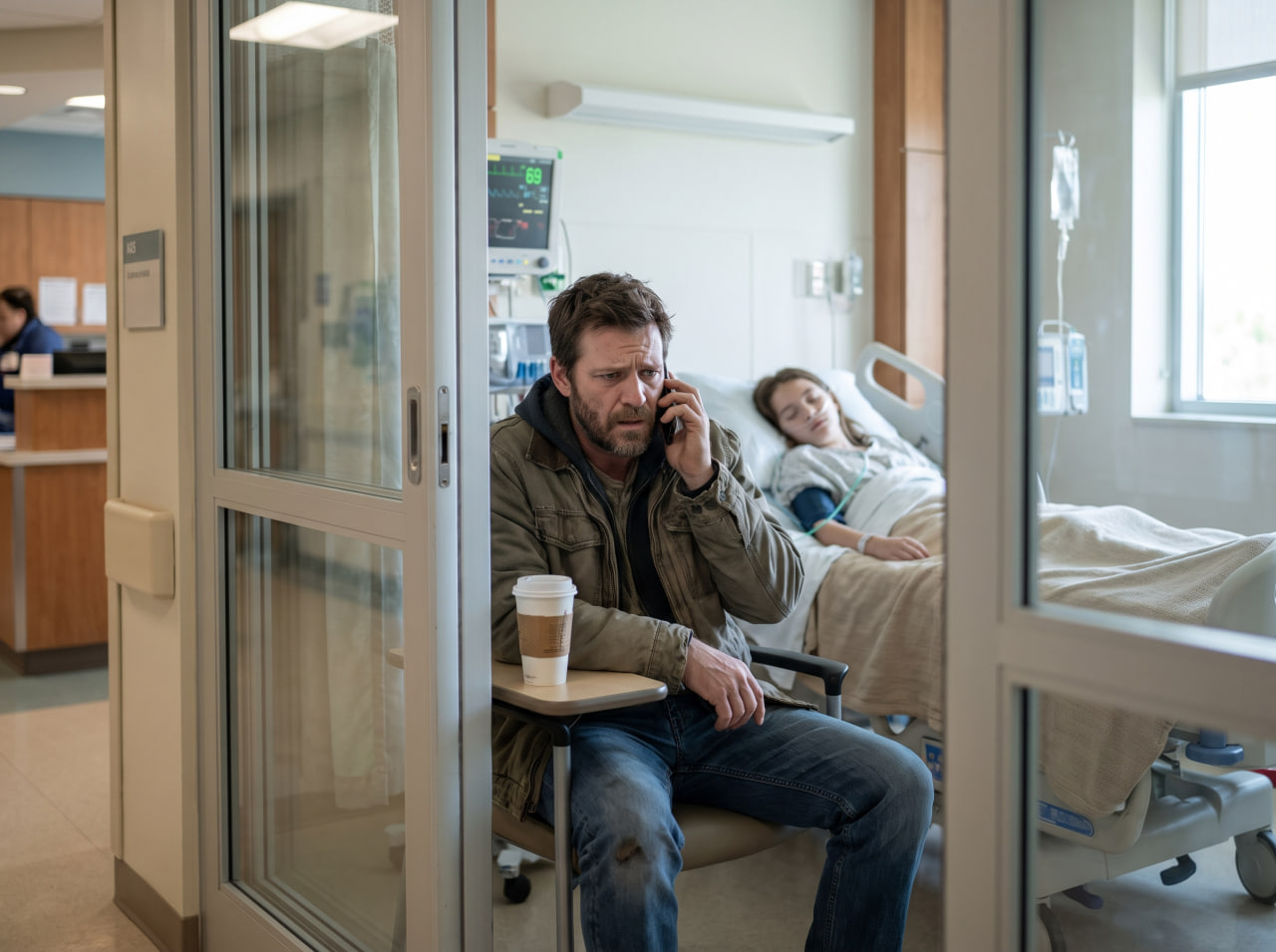
And the part of my life I cherished most belonged beside the little girl who had once lain in a hospital bed struggling to breathe.
My daughter.
The reason I finally learned to say no.
The reason I finally chose peace.
The reason I finally understood what love was supposed to look like.
I reached across the table and took her hand.
She squeezed mine.
And this time, neither of us let go.