
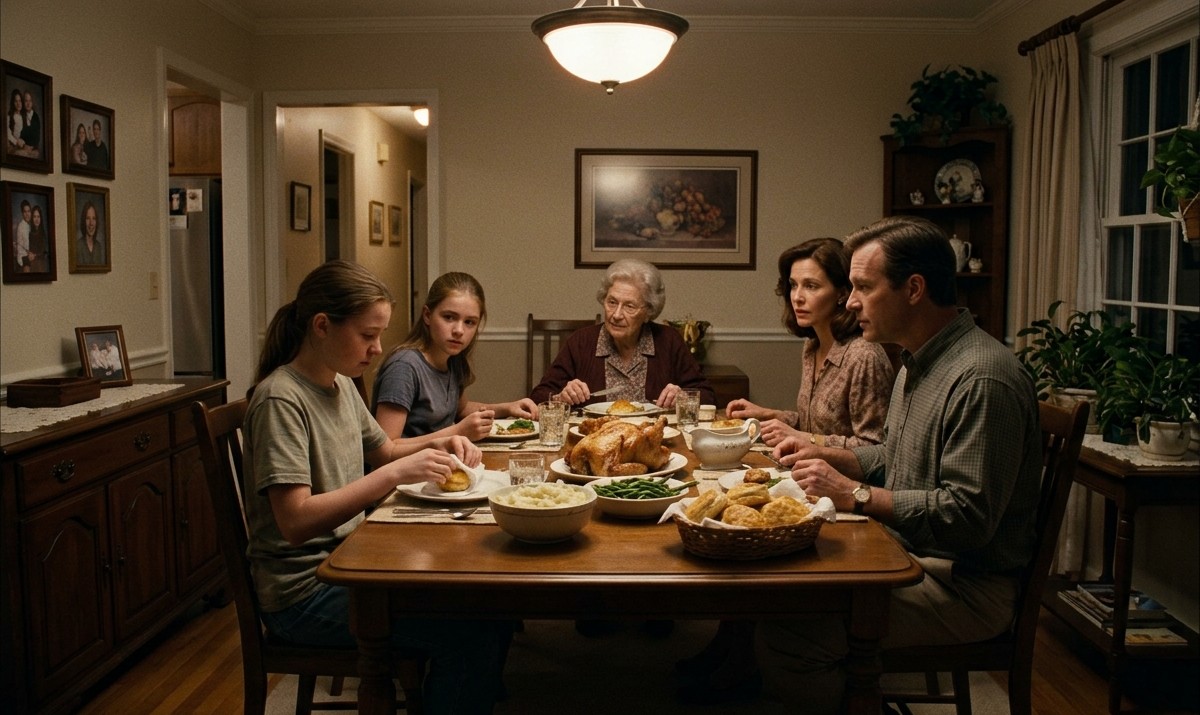
Samuel sat beside me, unaware of the significance of their conversation.
Mrs. Henderson explained that Rebecca had been born prematurely following a particularly difficult delivery.
While hospital staff were attending to another emergency, my mother noticed that the newborn was struggling to breathe.
She immediately summoned assistance.
Then she remained beside Rebecca until the doctors stabilized her.
“They told me afterward that another few minutes could have changed everything,” Mrs. Henderson whispered.
My mother lowered her eyes.
“I was simply doing my job.”
“No,” Mrs. Henderson replied. “You were doing much more than that.”
After Rebecca recovered, Mr. Henderson wanted to personally thank the nursing assistant who had noticed his daughter’s distress.
Unfortunately, my mother had already resigned.
My father had suffered an injury at work that temporarily left him unable to care for himself.
Mom had returned home to look after him.
The Hendersons tried contacting her through the hospital, but our family moved shortly afterward.
Eventually, their search ended.
Fourteen years later, their daughter had unknowingly invited the daughter of the woman who helped save her life to dinner.
Tears gathered in my mother’s eyes.
Then Mrs. Henderson opened the brown envelope.
Inside was a check for five thousand dollars.
The $5,000 Check My Mother Refused
Five thousand dollars seemed unimaginable to us in those days.
It could have covered months of rent, groceries, electricity, and other necessities.
But my mother immediately pushed the check away.
“I appreciate your kindness, but I cannot accept money for something I did fourteen years ago.”
Mrs. Henderson tried to persuade her.
Mom remained firm.
“My children may not have much,” she said quietly, “but I don’t want them growing up believing that kindness creates a debt.”
I would remember those words for the rest of my life.
Mrs. Henderson considered what my mother had said.
Then she returned the check to her handbag and made a different offer.
Her husband was expanding his hardware business.
He needed someone dependable to handle inventory records and administrative work.
Before working at the hospital, my mother had completed several bookkeeping courses.
Would she consider attending an interview?
The position offered regular daytime hours, health insurance, and a salary considerably higher than what she earned cleaning offices.
My mother hesitated.
“I don’t want special treatment.”
Mrs. Henderson smiled.
“Then earn the position. My husband interviews everyone himself.”
Before leaving, she insisted that we accept the groceries.
She explained that she’d purchased too much food for her household.
My mother knew that wasn’t entirely true.
But this time, she accepted graciously.
That evening, we ate better than we had in months.
Three days later, my mother put on her only respectable dress and attended the interview.
When she returned, she was carrying an employment contract.
For the first time in years, I saw her smile without sadness hiding behind it.
Our lives gradually began to change.
We stopped worrying about the electricity being disconnected.
Samuel received new shoes.
Our refrigerator remained stocked.
My mother began sleeping through the night instead of cleaning offices until sunrise.
Rebecca and I became even closer.
We spent weekends studying, riding bicycles, and helping her grandmother prepare Sunday dinners.
Nobody made me feel embarrassed about my childhood circumstances.
The Hendersons never treated me like a charity case.
They simply welcomed me.
When My Mother’s Illness Threatened Our Future
Unfortunately, when I was seventeen, everything we’d worked toward was threatened again.
My mother collapsed at work one morning.
Doctors discovered a serious heart condition that required surgery.
Although her health insurance covered much of the expense, she wouldn’t be able to work for several months.
Fear returned to our household.
I decided to abandon my plans for college and find full-time employment.
When I told Rebecca, she became unusually quiet.
The following evening, Mr. Henderson knocked on our door.
He explained that my mother’s job would remain available and that the company would provide temporary financial assistance during her recovery.
Then he turned toward me.
“Your mother tells me you want to become a nurse.”
I nodded.
“Not anymore. Samuel needs me.”
He shook his head.
“Your brother needs a sister who believes she has a future.”
He handed me an application for a nursing scholarship funded by a local charitable foundation.
I completed the application and attended the interview.
Several weeks later, an acceptance letter arrived.
The scholarship covered my tuition.
My mother cried harder than I did.
Four years later, I graduated and began working at Mercy Hospital, the same hospital where our family’s extraordinary connection with the Hendersons had begun.
I thought I understood everything they had done for us.
But decades later, Rebecca called with devastating news.
Her mother was seriously ill.
And there was an important document she wanted me to read before it was too late.
The Wooden Box Beside Mrs. Henderson’s Bed
By the time Rebecca called, I was forty-seven years old.
I was married and had two grown children.
I’d worked as a nurse for more than twenty years and eventually become a nursing supervisor at Mercy Hospital.
Samuel had become an elementary school teacher.
Our mother had enjoyed a comfortable retirement before passing away peacefully two years earlier.
Throughout those decades, the Hendersons remained part of our lives.
They attended our graduations, weddings, and family celebrations.
Mrs. Henderson sent birthday cards to my children, always signing them with the same affectionate words:
“Love, Grandma Helen.”
When Rebecca told me how seriously ill her mother was, I immediately drove to their family home.
The house that had seemed so magnificent when I was thirteen now felt strangely quiet.